
There’s a saying that I often share as a hashtag via the blog posts. This isn’t something that I just say because it’s catchy or goes well with the post I’m sharing. It’s a message that helps me on a day to day basis and to keep motivated.
“Control your narrative” has many meanings. It could be to follow your ambitions whether it’s a job, something you want to experience or even to do something creative like this blog. If you have any type of goal or a story to tell, do it your way.
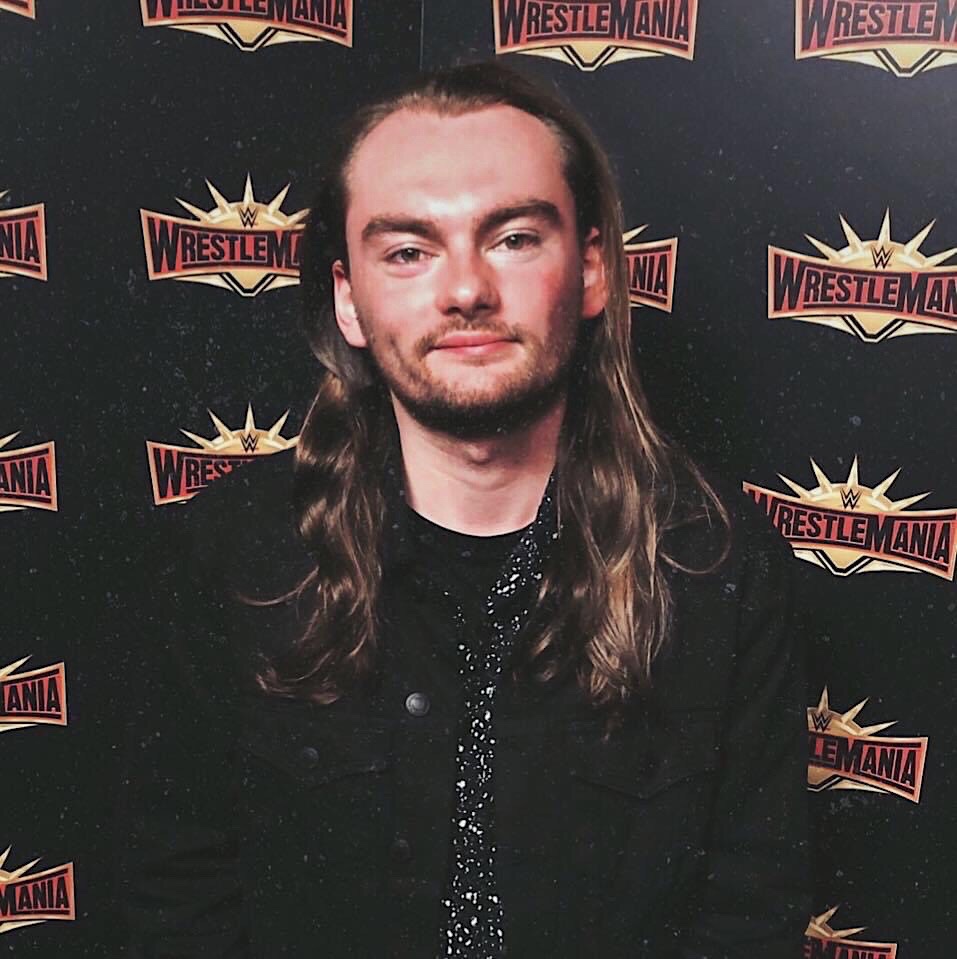
The person that I’ve spoken to for this week’s blog is the epitome of that. Morgan Richards is a journalist, radio DJ and podcast host and really has followed his dreams. He’s a huge pro wrestling and music fan, and his work in the jobs he’s done has covered those interests.
I first come across his Pro Wrestling journalism pieces via his work with The Mirror. He’s incredibly passionate and detailed in his work which has taken him even to America on two separate occasions to cover the WWE’s biggest show of the year, ‘WrestleMania’.
He also worked at Radio Cardiff, where he interviewed so many great Welsh bands like Kids In Glass Houses, The Blackout and many more. From there he’s gone onto to more strengths with ‘Sappenin Podcast which he co hosts with previous blog interviewee Sean Smith.
Last year he finished his studies at the University of South Wales and is now a fully qualified Journalist with BA honours.
In this chat, he talks up about his struggles with his studies as well as juggling them with his work in radio, podcasting and journalism. What keeps him driven and also he opens up on his journey with dyslexia and the stigmas which surrounds it.
We had an incredible in depth conversation via Zoom and I can’t thank Morgan enough for taking the time out of his busy schedule to talk to me.
Last year you completed your studies and are now a fully qualified journalist. Along with doing the podcast, what sort of challenges/pressures did you overcome whilst trying to achieve that?
It’s a really strange one with university as prior to that I’d have been doing a lot of journalism. I’d been working for Radio Cardiff where I’d be interviewing bands and doing some collective journalism as well.
I left school after my first year of Sixth Form. After I finished my A Levels I just knew that was the path I wanted to go into and didn’t see the point of wasting a year in school when I could hit the ground running by getting in some experience on the journalism front.
Going back to Uni was a bit strange because I had a few years inbetween where I never thought I’d actually go there to be honest. The experience of going there actually taught me different things and techniques. Especially styles of writing and the way I looked at things. It helped me how to approach general news, not just my topics of interest.
It was a bit of a struggle because at one stage, I was still working in radio, doing my studies and I’d started working on and planning the podcast with Sean. With those three things on the go for a while was a challenge. As the launch of the podcast got closer, I realised that I needed to take a step back with the radio, and my uni work as well as the podcast were my main priorities.
It’s hard to explain as a lot of organisation goes into it and in a way it benefitted me. Even though it was a stressful period for me, if the stress was due to something related to the podcast and if I was overthinking every detail I knew I had to stop.
I could switch my focus to a 5000 word essay which was due in the next days and vice versa. If I was overly worried about uni and needed a break from that, I would focus on certain aspects of the pod and plan that. It was a mixture of both factors in a stressful environment but it’s a time I wouldn’t change. Mainly because it was nice to have a balance and separation between the two.
When the Podcast launched in November 2018, I was halfway through my second year of uni. I’d already got used to being back in education as well as learning, writing new stuff and getting my work in for deadlines.
The podcast was a sense of joy as it was something I was very passionate and excited about. It was also hard work behind the scenes so if I was stressed about one, I knew I had the other.
I guess I’m quite an organised person anyways. If knew I had a deadline on a particular day, I knew everything else sorted around that. It has its benefits and disadvantages but it gave me room to breathe and wasn’t overthinking either one of them either.
It gave me the opportunity and space to tackle them head on and it’s all down to organisation. After the end of my first year I did freelance work for the Mirror based on Professional Wrestling and it led me to a a few mad experiences. I went to two WrestleMania weekends in New Orleans and New York.
I’d never been to America before but since I was a kid, it was my dream to go there to watch WrestleMania and I did it in my dream job. I was a journalist covering the event and some of my proudest moments of my career.
That was something that was down to the hard work I put in over the years. It most definitely shows that if you put in the effort, you can achieve anything you want.
You’ve been incredibly honest about the stigmas surrounding dyslexia and how it’s effected your studies, career and everyday life. What inspired you to be so open about this?
Well the thing is for many years I wasn’t open about it at all. I kind of hid it if anything because for me I didn’t want people to treat me any differently. One of the biggest things I’ve experienced with dyslexia and common conditions surrounding it is that people will think you’re slow or stupid and can’t do X, Y and Z and it couldn’t be any further from that.
For years I didn’t really really challenge that stigma, especially when it come to my work and never really said about it on air or anything I written at all. When I went to uni I had the same attitude of having a bit of a laugh with it. Like if I spell something wrong, I would never want to use dyslexia as an excuse and don’t want people for treat me. any different for it. For ages I kind of hid it.
Those closest to me knew and I’d have subtle jokes with them and stuff. Quite recently towards the end of 2020, I went on Sophie Eggleton’s podcast ‘Play, Pause, Repeat’ to really talk about it all. I was really nervous as I’d never publicised it nor ever talked about it on the podcast either.
I was quite worried about what people would think as this was a new experience to me. Opening up about dyslexia on a wide platform was completely alien to me so it was normal to feel that way I suppose. I wrote a post on my Instagram about it and Sophie did a fantastic graphic with a quote from the interview.
I realised that there’s so many people who suffer with these issues, and if talking about it helps just one person it would be a benefit. Not everyone is like me who can just take in my stride and shrug it off. Some people feel like it’s a roadblock stopping them from doing something they want to do.
So thought by going on there and anyone would think if I was able to do these things and overcome it by not letting dyslexia define him, why can’t anyone else?
I just don’t think things like dyslexia get a lot of attention and it’s hard then because you’re not going to shout at someone saying you have dyslexia. You end up putting that barrier there which makes things a bit worse and the stigma is still there. People cope in different ways like me with humour but not everyone will do it that way.
If there’s anything where you can talk about it in a structured way like me with the podcast or even just a conversation it shows you’re not the only one going through it. You won’t doubt yourself anymore as working for The Mirror was something I thought I’d never do because I thought I was bad at writing.
I believed in myself and my ability as a journalist and I achieved that goal via lots of practice to the point where their editors were happy with my work. The more you can make that stigma less awkward and embarrassing, the more people will know how to deal with it.
The lockdown period effected so many people across the world. How did it effect you personally and professionally?
It’s been a struggle and different cog in the machine to be honest with you. Its a strange one because I think on the podcast we’ve taken it as it comes whilst things were changing. As soon as it was deemed a pandemic where travel would be restricted, we were lucky that we bank our content and record plenty of stuff in advance.
Before the lockdown started, we had about four interviews already recorded so we met up before everything shut down and had a day of recording intros and outros for those few weeks. At the start it felt like 3 weeks and it would be over, which of course it wasn’t but we huddled together and thought that we had these ready to release and where do we go from there?
We tried to think of every type of alternative. I looked at different programmes online where we could interview people like Skype or Zoom as having worked on radio for years I’m such an audio nerd that I’d never want to put something out with poor quality.
So I looked into the best ways to put out quality content that sounded perfect. That really took a toll on me mentally for a while because I was anxious if we did something and people thought it sounded crap compared to our previous stuff. I found special settings for Zoom which gave the sound much better quality, I sorted a special mic for Sean to use and we took it as it came to us.
It’s a lot more work in terms of putting it together since the lockdown. Editing it and making sure the audio was decent was definitely a challenge as it wasn’t something we did in person like before. It takes a lot more time as we’re not in the same room and you’re trying to talk to the guests and some have been amazing where they have been able to use their own microphones. Others we’ve had to work a bit harder on but it was totally worth it.
It’s taken a toll on both of us mentally for personal reasons and beyond but professionally it was rough as well. Not only were we going through that change but the world was too. The music industry, PR, labels etc were all hit by it and I have notebooks full of dates of who’s touring and releasing albums. We get heads up to pencil in a certain band or person who was in the UK or releasing an album.
Some people were holding off. They waiting for the lockdown to end as we thought it was to be a few weeks and back to normal. I had conversations where someone wouldn’t do the interview in March or April but will do it in August when things are better to fly to the UK. Sadly it didn’t work out that way and everything had to be switched to online.
We had some brilliant guests since being in lockdown and when everyone realised that this is the world we’re in and it’s “the new normal” for a while, we able to talk to some insane guests that we thought we couldn’t get, would be too busy or hardly come to the UK. For example, Aaron Gillespie from Underoath or Matt Cutshall from ‘Emo’s Not Dead.
In Matt’s case he’s an online comedian so getting him on was a real coup as he doesn’t really come over the UK for anything. We’ve managed to get time with these incredible guests and had some fantastic, intimate and funny conversations with them as a result.
It’s had its ups and downs with hard work getting accustomed to the changes that needed to be made in order to make the podcast. It’s a lot more than just recording it and putting it out as there’s so many other things. We treat it as professionally as we can without taking ourselves way too seriously. It’s been a weird one but nice as we’re now getting our heads around it and we know this is the way forward for the time being.
Fingers crossed we can travel again and speak to people in person. It’s a weird process for so many people in many industries across the world and podcasting most definitely was something we had to adapt in order to continue. But we did it and we’re happy and proud to do so.
It’s definitely got us in a learning environment and something we were forced to adapt to. Even before the pandemic hit, we always promised ourselves that we’d never do interviews over the phone or video as in person is different. We just felt like it would be better that way but the conversations via video chat have been intimate as these people haven’t really been talking to anyone outside of their bubbles.
So they’ve got us two Welsh idiots arguing with each other over silly things before we start recording and then they know we’re a laugh and a connection builds ahead a great chat.
I do worry about Zoom glitches and stuff like that and some people won’t realise or even think like that. However I want to listen to this in like 20 years and think “wow I spoke to Bert from The Used over Zoom? That’s crazy!”.
I want to be proud of the work we’ve done and not find any faults with it so that’s why I’ve done my research into perfecting the audio and overall quality. This isn’t knocking any other podcasts or anything but there’s some I listen to and the first thing I think of is that the sound’s really bad. I’m not sure if it’s just my point of view because I’m a massive audio nerd but I just want to put the best quality sounding experience out that I can.
I don’t want it to be second best and use any excuses as to why it wouldn’t be. If you put the work in, you get the results and I’m chuffed with what we’ve done to be honest.
Just the basic stuff of having something look forward to from a guest’s point of view is amazing as we can’t believe that they’re excited to talk to us. Even more when they say they’ve enjoyed it after it’s ended. I guess you can say it feels more like a chat than an interview and that means the world to us.
Whether it’s wrestling, music or radio you’ve epitomised the saying “follow your passions”. What would be your advise to someone who also wants to do that?
There’s quite a few things and one of them is just to go for it. You’ve got to try and if you don’t, you’ll never know what you can achieve as a result of the effort you’ll put in.
A lot of people worry about failure and that’s normal but I’d rather look back in 50 years and reflect on something that didn’t go well but accept that I tried my best.
I’m a firm believer in following your passions and one thing I’d always say is do as much as you can in order to achieve your goal. If you’re looking to get into journalism like I was, just start off with an album review if it’s music that you’re into. Write a report or story about things you like and put yourself out there.
Don’t be afraid to hit a roadblock along the way because it’s a learning curve and you can take it in your stride and move on from it. On the flip side of that and from my own experiences, as much as I recommend to put yourself out there, don’t rush into something if you’re not ready.
For example, I know a lot of people have started doing podcasts during the pandemic and have started very well. However, after a few weeks they hadn’t really continued to have the content available that they hoped to have and have fizzled out.
Do the planning and don’t jump in straight away. By planning ahead you can bank plenty of content so you don’t run out of it. It helps us massively because me and Sean know by having plenty of interviews recorded weeks and even months in advance is a massive benefit. Not just creatively but mentally as well.
We’re not rushing to put something together and it’s a relief to be honest. I’d much rather be spoilt for choice than being worried about having nothing to release. Just try and go for it. Don’t let age or anything else hold you back. We do have different things which effect us in our own particular ways but have a go. If you’re passionate about it, go for it.
I was worried about going to University but it ended up being one of, if not the best decision I’ve ever made. I’ve seen myself grow and obtain skills and connections which has made my passion for journalism grow stronger because I went for it. I backed myself and it paid off massively.
At first I went to the University for an open day as at this point I was still a bit unsure. As I said earlier, I never thought I’d ever go to uni and I went to have a look. Basically it was to see if this really was the thing for me and if it was I’d possibly apply to go the following year.
I spoke to some people there including the main lecturer there. During our conversation I mentioned the work I’d done with the radio and written pieces that I had written. He then looked at me and said “can you start on Monday?”. I was surprised and couldn’t tell if he meant the Monday coming or the first one of the following year.
He did actually mean as soon as possible and said I’d be a really valuable member of the course. It really did take me by surprise as I didn’t expect this at all and he referred me to some people to get everything sorted. So just like that instead of waiting a year, I pretty much immediately started the course.
Only one person knew I was going to that open day and by the day end I was a university student. If I hadn’t put myself out there by going to that open day and seeing what could happen, I’d probably wouldn’t have gone to uni for a start. Also, the connections with the people on the course wouldn’t have been made either as well as the opportunities and connections which arose in that timeline.
If I did wait a year, those things may never have happened and I don’t know if I’d have had the same passion as I do now. You can plan ahead and think that waiting is the best thing but it doesn’t go like that sometimes. If you want to do something, I’d say go for it and prepare yourself where you can.
Certain aspects of it has to be planned and some you can just go for. With the podcast we had 5 or 6 episodes recorded before we even released the trailer. We knew what we wanted to do and where we wanted to go with it. I ended up going to uni a year before I originally thought I would.
I could have easily said no and waited a year but I didn’t. I’m very glad that I did make that decision to go 4 or 5 days after the open day and thought let’s have a go and here I am today a lot better off for doing it.
You’ve spoken about how the Patreon community which supports the podcast feels more like a family than a fanbase. How beneficial have they been to you?
They’ve been massive. It’s hard to answer this as we do get a bit worried on the podcast that we talk so openly and passionately about the Patreon, how to sign up and the connections we’ve made with them that we’re don’t appear sincere.
In fact we couldn’t be more sincere about them we never expected the community that’s now there. We probably thought a handful maybe 5 people at best might sign up. Sean jokes about it all the time that they’d help us with train tickets and petrol but people took it in their stride and have been so supportive.
The support has even brought tears to my eyes. Not just because of how supportive they’ve been to me and Sean but each other. They’ve gone from total strangers to forming strong friendships and it’s on a basis of just being nice to each other.
There’s people from opposite sides of the world who’ve bonded, one who’s even flown from London to Australia to see a band. Some have gone to gigs together when they’d have gone alone in the past. When I get a notification about the group on Facebook, 9 times out of 10 it brings a smile to my face and I feel so lucky to have that lot in my life.
It’s been magical and we’ve let them make it their own. Me and Sean could have easily “policed it” but where’s the fun in that? We could have just made sure they talk about the podcast but most of the time they’re talking about other things like music, or posting a funny meme. Day to day life is shared in there and it’s via a connection made by these wonderful people.
Lifetime friendships have been made and especially in lockdown they were were supporting each other with zoom chats. I feel like I’ve made some amazing friends through it as everyone has been so supportive. We don’t just say it but it is a family and I can’t thank them enough for sticking with us and being themselves.
This is all through people supporting the podcast and come in to have a laugh as well find a safe place. Me and Sean are so proud and grateful to have them via something that’s brought this wonderful bunch together. Its been magic.
What do you find helpful in overcoming difficult situations?
I think it’s more beneficial to know when to step away from something. If something is getting quite stressful, it’s good to counteract by going for a walk, making a cup of tea.
I tend to use the term “my heads gone” when my head is overfilled with information whilst I’m working on something. By acknowledging that, I know I need to take a step back. This could also be just by putting a YouTube video on or a comedy on Netflix in order to unwind. It feels like I can go back to work with a fresh mindset to approach it.
It’s also important from my point of view to just breathe and make the logical choices in the moment. By using logic it will guide you through a less stressful period as well. Even if it’s just for a half hour or 45 minutes, taking a break is really good as you do need time to reset in order to go again.
What I’ve learned during the lockdown is routine is key but also to mix it up. I spend loads of hours every week working on stuff but now I know I can switch off at a certain time which is beneficial to me mentally as well as physically.
It’s helpful in stressful situations as if you can use your time effectively, things will get done and you have plenty of time to rest and recharge.
You’ve made no secret that you’re straight edge (don’t drink, smoke, do drugs). How helpful is that lifestyle in regards to having a positive mindset?
Here’s the thing and it’s a very honest answer, I don’t really know. I never tried it and can’t compare to how other people cope with drinking alcohol etc.
The reason I don’t ever do any of these things is because I’ve never felt to need to. I’ve gone to parties or on a night out after a gig and never really felt I need to boost the good feelings I have from these experiences. If people are having a laugh, that’s all I need.
People ask me how do I cope on a night out without a drink and I just do. I’ve never even thought about what it would be like if I did have a drink and I’m not judgemental towards anyone who does, I just never tried it and have gotten used to it.
There’s comedy shows like ‘The Simpsons’ and the main character is a drunken slob, especially after a day at work. There’s a difference because there’s a preconceived notion that a person will come home from work and crack open a beer or pour a glass of wine after a stressful day. The only difference is that I do unwind but not in that way.
I’ll come home and have a cup of tea, a glass of Pepsi or my fancy drink which is a J20. If I have a whole bottle of pop, I’ll have a sugar rush whilst if you drink a whole bottle of wine, you might end up on the floor. We all deal with things in different ways.
I know people who can’t go out without having a drink whilst I can stay on the same can of Pepsi for an hour. It’s hard to describe but literally it’s just something I never fancied doing and knowing that it’s beneficial and I can still have a good time means I never have to change it.
It’s each to their own and I don’t treat or look at anyone differently. It shows you can enjoy your surroundings and I’ve had so many people ask me why I don’t drink and it’s funny to see their reactions sometimes.
They’re surprised and want to learn more as it is unusual for them I suppose to have someone who doesn’t drink out of choice and is outgoing.
You also get people who’re kind of offended and ask questions like if I’m scared or if it was family related and it’s all down to choice at the end of the day. I’ve always had a good time without them so why change the habit of a lifetime?
What would you say to someone who is struggling and doesn’t know if talking about it is the right thing to do?
I would say that if you’re really struggling and you don’t know where to to turn to. Whether that’s finding your safe space by talking to a friend, a family member or a complete stranger that wants to help, do be open as a problem shared is a problem halved.
The issues you’re facing can be shared without someone who’s possible gone through a similar path and can look at the perspective differently and give you a fresh context to it which is helpful at times.
I’ve learned myself that I can be one to bottle up things and during the lockdown I didn’t post much on social media until I posted something where I opened up. I mentioned that I’d been struggling during the pandemic and so many people reached out which was quite overwhelming to me.
Some people who I thought didn’t care that much in the past reached out which again shows by being more open, you can have help offered to you by the most unexpected of people. I felt a bit bad because I took a while to reply to them all but some people may not like to go that way.
If there’s someone who you know that you can open up to, please do so as we need to talk about the bad times as much as the good times. Having a bad day happens to us all but talking it and confronting it is the best way to move on and move forward.
The more we talk and support each other, the better place it would be for all of us.
As I said at the beginning of this post, this chat with Morgan absolutely flew by. Not because it was enjoyable talking to him, but hearing the joy that his work brings as well as his story was enthralling. I’m sure it would inspire so many people, especially those who want to follow their ambitions like he has.
The things he said about dyslexia is brilliant as well. It isn’t a topic which is talked about as much as it really should be. I totally understand why he didn’t feel like he had to be open about it as he didn’t want sympathy.
I myself have dyspraxia which effects my numeracy skills as well as my balance and coordination. That effected me massively in school to the point where in primary school, I had learning support with maths. I hated it and would feel kind of ashamed of myself. Same goes with PE as I’d struggle in certain aspects and I’d get frustrated with myself.
Like Morgan, I’ve learned that it doesn’t define me and I can still achieve so much in life. His story is proof of that as he’s a superb journalist, podcaster and more-so as a human being.
The podcast is a joy to listen to every week and the community via Patreon are a fantastic bunch. In the few months I’ve been involved, I’ve met some friends that feels like I’ve known for years and they’re very supportive to each other as well as Sean and Morgan.
After I finished recording, we chatted for ages about football and wrestling. We’re both Manchester United fans as well as wrestling so I could have spent another hour talking to him about those. It’s great to see he’s combined his love of music and wrestling into a creative outlet as well as a living. Proves to show that if you “control your narrative”, anything is possible.
As always, massive thanks to anyone who’s taken the time to have a read of the blog. Of course huge thanks goes to Morgan as well for taking the time out of his busy schedule to talk to me.
I’ve posted some information about Sappenin’ Podcast and the Patreon community as well as Morgan’s social media links.
Hope you’re all ok. Take care, stay safe and until next time don’t think of this as a goodbye, but more of a see you later!
Sappenin Podcast – available via Spotify, Apple Podcasts, A Cast and other streaming/download platforms.
Podcast social media – @SappeninPod via Twitter and Instagram
Patreon – www.patreon.com/Sappenin
Morgan’s social media – @mhrichards_ via Twitter and Instagram
 MIND OVER NOISE