
It’s very frustrating when you attempt to do something and find that you’re not very good at it. No matter how much you practice, it just won’t happen and you keep blaming yourself but the reality is, it’s not your fault at all.
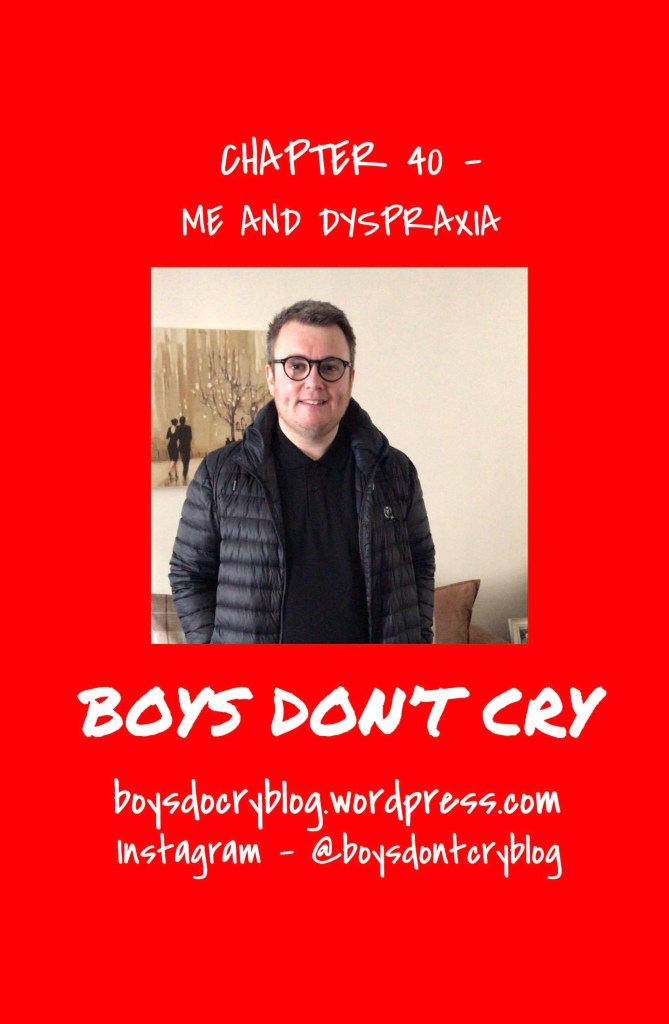
As I mentioned briefly in my last blog post, I have Dyspraxia. It’s also known as Developmental Coordination Disorder (DCD) which is quite common as 10% of the current population are known to have been affected by this. Males are four times more likely to have Dyspraxia than females and it has been known to run in families.
It’s often confused with Dyslexia but the main symptoms are that it effects your coordination, movement as well as your mathematical development. Essentially, your working memory is used with maths as you need the ability to hold information such as numbers in our head and work with them to work out the sum.
Working memory means you have to do something with it aside from just in retaining the information. In 2011, 43 children with Dyspraxia took part in a study and 88% of them showed difficulty with maths. Reading this statistic immediately took me back to my school days where I struggled massively with anything number related.
To this day I struggle massively when it comes to maths. If ‘Countdown’ is on the telly, I love the letters round where I try to make a word with as many letters I can but as soon as Rachel Riley puts those numbers up, I dread it.
For example, if someone asked me to divide 45 by 4, the numbers would go into my head and nothing would happen. It’s just blank but then I get frustrated with myself and then panic as I feel I’m on a time limit.
Like I said, it was the same for me in school. When it came to English, I loved it as spelling and writing came to me quite naturally. Maths however was a huge struggle as whilst my friends were learning their 6,7,8 times table and beyond, I was still stuck on the 2,3,4,5 tables.
I remember it getting the point where when the teacher said we were doing maths, I’d lose any enthusiasm I had for school work and it would even upset me to the point of tears being shed.
I don’t remember my diagnosis but my parents have told me that it was noticed quite early on in my school days when I was either 3 or 4. My struggles with maths was a major sign along with my balance and coordination. Staying with maths, I eventually required additional support with it as a teaching assistant was there to assist me. I still see her around these days and only the last couple of years I’ve really appreciated the help she gave me.
Having homework was a tough task. I know the majority of us hated doing it but if it was Maths it was really frustrating. My Dad is quite good at maths and I can’t imagine how much patience he had whilst sitting with me. Tantrums were a plenty but I kept trying. Although my grades in maths wasn’t high and there were plenty times where I didn’t pass but my reports do say that my effort was there and to me that goes a long way.
As I went from Primary to Secondary School, I found myself kind of back to square one in many ways. I didn’t have learning support and to be honest, I didn’t really speak up too much about my struggles. It’s stupid of me to do that but I guess I had that “you’re in big school now” mentality.
Of course the teachers knew beforehand that maths wasn’t my strongest and when I did try my best, I’d still struggle. When we were put into sets from Year 8 onwards I was in the bottom set and stayed there for the duration of my time in secondary school.
I should have spoke up and mentioned that I was struggling more. I went to additional maths classes after school but it just felt like I was going around in circles. Some teachers were more helpful than others and some progress was made.
I tried other avenues like websites, CD-ROMs and workbooks to help me with it but it felt like if I took one step forward, I then found myself three steps back. It was so frustrating, especially as I was doing well in other subjects. When I did my GCSE’s, I had great results. I passed all the subjects that I was excelling in but maths was still the proverbial Achilles heel.
I failed with an F and did two resits, but the end result stayed the same. Eventually I threw in the towel and knew it just wasn’t to be.
The block I referred to is still there when I try and work something out to this very day. In the jobs I’ve worked since leaving school, numbers have been a key element. When I worked in my very first job in Tesco at age 17, I used to panic if I had to count change and my mind would go blank. I’d get worked up in my head.
In my current job, do have to add a lot of figures up and luckily I have a calculator. However, there is still a part of me that struggles with the numbers and it often puts me in a panic. However I know it’s easy to say but now I can take a breath and just take my time with it. Back in Tesco, like with school I felt like so much pressure mostly with what I put on myself.
There’s no shame in asking for help and I wish I realised that sooner. Getting myself worked up and doubting myself isn’t going to help me at all. If I struggle with something numbers wise at home, I’ll ask my fiancée. She’s a teacher so she has to be good at maths right?!
In all seriousness whether it’s in the house or work, support is massive and in my situation, it’s not that they’d be doing my work for me, it’s just sometimes I need a little help to get on the right path.
Going back to the start where I described what Dyspraxia is, the key words are most definitely, “balance and coordination”. This is effected by things such as walking in a straight line, hand movements, tying shoe laces or even something like running. Like with maths, I had my fair share of frustrations which still occur today.
With hand movements and coordination, it’s impacted via things like handwriting. I had some learning support with that as I was a bit behind the other kids in primary school when it came to writing. I was good at spelling and found it frustrating how writing the word was more difficult than actually spelling it as my hand seemed to venture off on its own journey.
With the right support and techniques, things got better though and since the age of 7/8, I haven’t really had any complaints about my handwriting. The support I had was through things like pencil/pen grips which helped me massively. It’s been known that wider stemmed writing equipment can be a massive benefit to a child learning to write, especially if they have dyslexia or dyspraxia.
I was given work sheets, where I would see a word or a sentence with a straight line underneath it and I’d have to try and copy what was written without going away from the line. The teachers were incredible as well as supportive. Like with many children with dyspraxia, it’s known to be especially fidgety, have trouble sitting up straight, get distracted or lose concentration easily.
A lot of it can be mistaken for bad behaviour. Of course like any child growing up, I was mischievous from time to time but there were times in school where I looked like I was “daydreaming” or switched off. The reality was that I had real difficulty concentrating compared to other children, hence more as to why I needed a bit of extra help.
My parents tell me that things started turning around when I was given work in a structured way with clear directions so I wasn’t confused. This helped massively with the handwriting aspect as well as with my maths although the latter I still struggled with on a larger scale.
Like I said earlier, from the age of 8 onwards my handwriting improved and I enjoyed writing especially creatively. If we had to do a project or story I enjoyed it and was commended for my style of handwriting. It just shows that with the right support and noticing it an early age, children with dyspraxia can go on to excel and whatever the hell they want to do.
Staying with balance and coordination, the hardest part to this very day is physical activity. During the early years of secondary school, I would dread the PE lessons where we did gymnastics. Anything balance related like walking the beam was pretty much impossible due to my balance issues. I did try it, but after one or two steps, I’d fall off.
Things like would hit my confidence, especially when most of the class was walking across it with no problem as well as being able to do a forward roll without losing balance on the way down or stand on one leg. Like I’ve mentioned in previous posts, I was bullied and one of the reasons was because “I was too slow in PE.”
An example of this was during Year 7 when we had to do an “assault course” for the charity Tenovus. Essentially it was all the gym equipment like climbing frames, walking the beam, jumping over horse etc. I didn’t want to do it as I know so much of it would be difficult but my friends encouraged me to go for it and try my best as did the teachers and my parents.
The bullies on the other hand wasn’t as encouraging. The course was a competition between the four forms in our group and the form with the overall quickest time would win. To get to the point, I completed it and let’s just say I didn’t break any records in doing so. Walking the beam went the usual way where I’d fall off after a step or two but I finished it.
My PE teacher commended me for completing it instead of giving up and my friends were pleased for me. As soon as we got back into the changing room, the bullies would throw insults like “you’re so fucking slow”, “we’re never going to win now thanks to you” and that broke me. I actually had an award from the charity for special effort and I hated having it because I was scared it would just encourage them to ridicule me more.
Looking back, I should have been proud of myself. I took on the course despite all doubts and finished it. I didn’t quit and it doesn’t matter what time I did it in as long as I gave it my all. It’s similar to when I ran the Nos Galan race in 2019. I trained for it well, finished it in good time but the fact remains that I did it and gave my best effort. So fuck what they thought of me, I’m a better person for doing it.
In the last blog entry, I touched on Dyspraxia via me playing football. That has been a real rollercoaster for my confidence as I’ve been ridiculed for my “lack of skill”. My balance and coordination would be a hindrance when it came to running with the ball and even things like “keepy uppies”.
During training sessions, one of the most known drills is dribbling with the ball around the cones. Of course I’d try concentrating but where I ended up going with the ball would be slightly off from where it was supposed to be. Plus using both feet to run with the ball impacts my balance so I would fall over. I’d get a few laughs but I’d pick myself up and go again.
The keep ups however, is one that will forever frustrate me. To this day, I’ll be lucky to do 3 or 4 keep ups as my balance and coordination just won’t let me. It’s not an excuse and I have tried to practice but I simply can’t do them. I’ve accepted that now but there was a time where it would get to me and others would ridicule me for it.
I enjoy football. It’s my favourite sport and I love playing it. I realised a long time ago that I was never going to be running onto the pitch of Old Trafford to play for Manchester United but I enjoyed playing. Whether it was going training, playing a game of 11 or 5 a side, it was exercise and competitive which did me a world of good.
Unfortunately, similar to the PE situation, there’s always a dickhead or two that will bring you down. So called friends would make fun of me for my lack of skill. If I missed an easy chance to score a goal, a bit of stick is normal but being made fun of for being too slow and not being able to do a skill that many others find easy isn’t and it’s pretty shitty to be honest.
If even got to a point where someone I considered to be a friend at the time would record me when I was playing football and would post the video on social media to make fun of me. Again, I know banter and a joke can happen but there is a line and he crossed it. I had people messaging me privately and even people I didn’t know commenting on the video saying how shit I was and that wasn’t called for.
That just shows that there are some shitty people out there who think they’re having a joke without realising the ramifications of what they’re doing. Also, just take a moment to understand that not everyone will be doing skills like Cristiano Ronaldo and Lionel Messi and are just simply having a kickabout.
Simple message is, don’t be a cunt. Just think about what you’re doing. Those idiots would kill any confidence I had and I would go weeks and even months without kicking a ball. If you make a mistake during a game and get a “fuck sake” or “what was that?”, that’s normal as criticism comes with any sport. However, I go back to the point of there is a line and ridicule isn’t acceptable nor is it warranted.
Quite recently I’ve gone back to football training with my local team, AFC Aberaman. I’ve got no ambition to try and get in the team and there’s a cracking squad who’d be miles ahead of me if I did. I simply go training because I enjoy it. When I first went back I struggled to do one lap around the pitch. Some two months later and I’m jogging home because I’m coping better and making strides.
The best thing about it is I know most of the boys and they don’t take the piss either. There’s banter and a laugh but they’re very encouraging. If I’m last during a run, they’ll be cheering me on and there’s praise if I do something good. Of course there’s constructive criticism if I get a bit lazy or do something wrong but it’s all for my benefit.
They’re a top bunch of lads that I’ve known for a few years now and I don’t feel anxious anymore when I go, whilst in the past I’d second guess myself all the time. I get along with everyone, it’s a good outlet especially in the times we’re in with COVID and it’s getting me fitter. As the old cliche goes, it’s as good for the mind as it is for the legs.
The final couple of things I’ll touch on with my experiences is all related to two very simple things to many people – tying shoe laces and wriggling your fingers. Not many people know this aside from my fiancée, parents, sister and some close friends but I still can’t tie my shoe laces properly.
I’ve tried practicing for years and been more than patient with my efforts but the fact remains that my hand coordination just won’t let me. Whilst doing my research into Dyspraxia, I found it’s one of the most common difficulties that are reported in the case studies that I read.
There are ways to support and plenty of guidance on offer . There’s shoelace boards with laces attached to help you practice as well as groups, pages and even blogs that offers a lot of help on any of the main social media platforms as well as tutorials on YouTube.
It may help you and you may be like me that sometimes doesn’t untie their shoes because you’re worried that you won’t be able to tie them again. Even to the point that you have to ask someone to tie them for you. Either way, it’s easy to say this but I accepted a short while ago that, you can’t be good at everything and it’s not my fault.
Another reassuring and even inspiring factor came in the form of Harry Potter himself, Daniel Radcliffe. Many years ago when he was performing on the West End, Daniel revealed that he has Dyspraxia. He resonated with me right away as he grew up being mistaken for being clumsy and was originally perceived to be lazy with school work when in fact he was struggling.
He also like me still has problems tying his shoelaces and has issues with his confidence as a result. What I took away from this is that Daniel Radcliffe did not let it define him. He went on to be in one of the biggest film franchises of all time and has since carved out a career as a superb actor. In many different films/genres.
The frustrations he felt resonated with me as I’ve been there. Same goes for anyone else in the world who’s been diagnosed or are undiagnosed with Dyspraxia. I’d be lying if I said I’m fully at peace with it because there is one thing that really irritates me and that is that I can’t wriggle my fingers.
If I do, only one or two fingers will move whilst the others will stay still. Motor functions are a massive factor and it’s the same when I do buttons up or pick up something. I’m not clumsy although it appears that way. I’m not using this as an excuse but I literally can’t help it as I was born with this and I’m still coming to terms with it.
This is something I’ve held off for quite a while and was a post I considered writing quite early on but I did feel a bit scared opening up about something like this. Especially when it comes to me admitting I can’t tie my laces and other hindrances I felt.
What matters though is I have spoken up about it. I hope that it relays a better understanding for Dyspraxia as there are many misconceptions about it as well as it being confused with with other conditions.
I will not let it define me. It’s something that I should have realised a long time ago when those bastards at school or later on in life who made fun of me. I’m better than what they made me out to be and I’m enjoying the things that I enjoy.
At the bottom of those post, I’ve posted some links to some helpful websites that gave me some information and guidance whilst researching for this post. If you’re a parent reading this and feel this is a bit close to home, speak to your child’s teacher. If you spot it early like with me, your child’s education will flourish like it should.
There’s no shame in admitting we need a little help sometimes and we can’t be perfect at everything. Without the help I’ve had whether it was teachers, learning support, friends and family, I don’t know where I’d be now. There are low points but when I came away with the majority of my GCSE’s as passes and then 2 years later, finishing school with 3 A Levels, it was an amazing feeling.
It was proof that if you put the work in, you can do anything. Plus, it was a massive middle finger to those who doubted me. Once more, Dyspraxia isn’t the be all and end all, you can excel in life and slow and steady wins the race.
If you enjoy something, do it. Don’t let the horrible people put your down. Encouragement is key and with a positive mindset, anything is possible.
Thank you once again for taking time out of your day to read this. It really does mean a lot and if just one person can resonate with this and feel it benefits them in moving forward, then that’s why I do it. Awareness is key.
Take care, stay safe and until next time don’t think of this as a goodbye but more of a see you later!
Helpful Links
https://www.nhs.uk/conditions/developmental-coordination-disorder-dyspraxia/
https://www.nhs.uk/conditions/developmental-coordination-disorder-dyspraxia-in-adults/
https://www.medicalnewstoday.com/articles/151951
https://dyspraxiafoundation.org.uk
 MIND OVER NOISE
Thank you for posting this. I was diagnosed with autism at ten years old. Part of my condition is impaired motor skills, so reading this drew a few parallels with my experiences.
LikeLike