In nearly every single one of the previous 40 blog posts that’s been written, I’ve reiterated that mental health does not discriminate. It simply doesn’t matter what way of life you live, where you’re from or what you do, our well-being can be effected.
Anyone can have their dark periods as the key word involved is HEALTH. It’s just as important to look after ourselves mentally as it is physically. The more we talk about it, the less stigmatised this important topic will become.
The person I’ve spoken to for this blog post realises just how important it is to look after ourselves as well as to keep checking in on our family, friends, colleagues and anyone else who’s in close proximity. He also understands that mental health can have an impact on any one of us, regardless of our status.
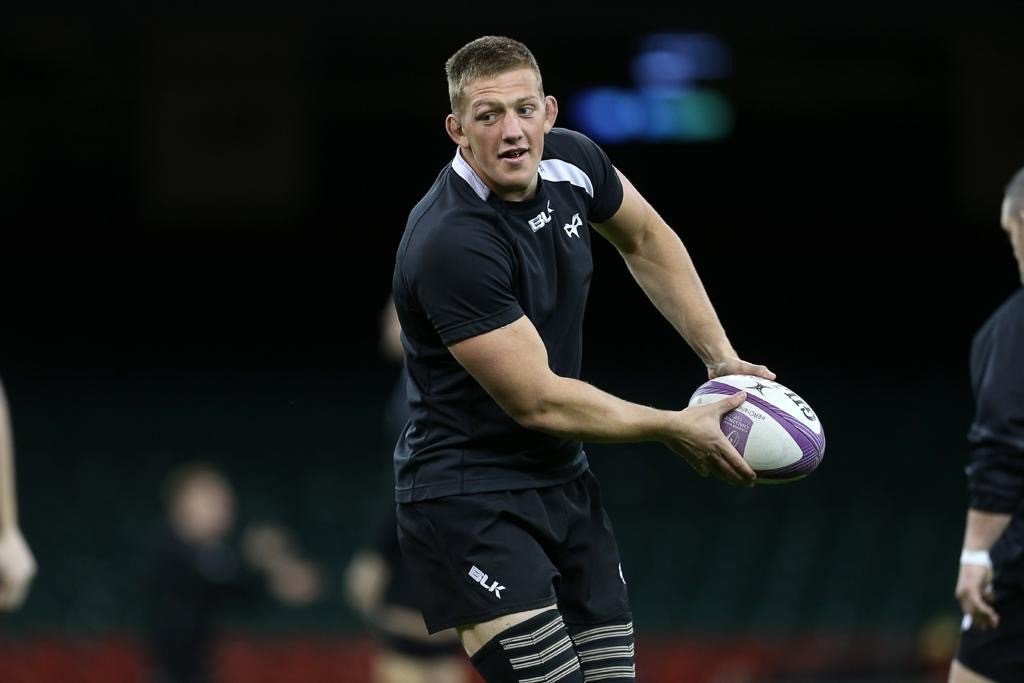
Lloyd Ashley is a professional rugby player and has played for the Welsh Regional team, Ospreys for more than a decade. He has since surpassed over 100 League appearances since coming through their academy.
In April 2020, Lloyd launched his own company named ‘Living Well With Lloyd Ashley’ which specialises in motivational speaking surrounding wellbeing, of which mental health is a very important part. The company offers support and guidance for schools, colleges, companies and other organisations.
Lloyd is also an ambassador for the Mental Health charity Hafal. He’s also undertaken a course in counselling, as well as completing a course in lecturing. All of these skills have helped guide Lloyd on his personal and professional journey, showing that he’s a fantastic advocate for mental health and that his interest and passion for the cause goes beyond sport, but to anyone in their day to day lives.
I was very grateful that he took time out of his busy schedule to talk to me about what inspired him to set up his company and what mental health means to him on a personal level.
What inspired you to set up ‘Living Well…’ and what are the main things that you’ve learned from it so far?
I think there’s a few different things that have inspired to set up the business. The fact that suicide rates here in the UK are so high is one important factor. Also, from an awareness point of view, I feel that we don’t do a lot of education around mental health.
Checking in on each other as men was a massive part as the stigma which surrounds male mental health is a major issue and was something I wanted to address. These are huge points that I took on board when I started the initial steps in what led to becoming ‘Living Well’ and there were so many avenues which helped me along the way in starting it up.
I already had a schools program that was running and it was based around healthy living. I was doing that in primary schools but was more based around eating good food and enjoying sport together. It was during these sessions that I noticed that people doing stuff together often brings them happiness.
On the flip side, a lot of times we’re made to feel isolated in these situations when we’re never really meant to be. That education around helping children understand that playing together and having that welcoming and less isolated environment would only be a good thing. It’s good to teach that to 10 or 11 year olds as they’re in the basis of forging their development and skills around relationships.
I also liked to work with 16 to 18 year young men as they were another target audience with my courses. That age bracket is also a huge changing point in your life as well so it was something I took on board early on. With the education I had from being in a team environment with rugby, along with what I’ve learned doing an introduction to counselling course as well as doing my lecturing qualification, I wondered how I could put those together to be an ambassador for mental health?
I’ve also been an ambassador for Hafal, the Welsh Mental Health Charity for about 2 years. Whilst being in that role, I realised that ignorance is bliss and you don’t really know what’s going on around you until you take time to stop and take notice. Doing that introduction to counselling course, I found that we’re not asking enough open questions or giving people enough time.
To summarise, there wasn’t enough support to help people to be honest about mental health. All of these factors were very important to me when I started to set up ‘Living Well’ and I continue to implement them as the business grows. I became a lead for mental health and wellbeing in the Welsh Rugby Players’ Association shortly after setting the business up, so that helped me set up awareness and support programs in academy systems.
That was a very important aim for me to get that educational aspect set up. Also, I wanted to get the schools program set up as soon as possible in as many of them that would allow me to come and talk to the kids. Aside from that I wanted to get out there and speak to organisations, clubs and businesses to speak about mental health.
By speaking to all of these sectors, I want to highlight how we can start the conversation and not take a backwards step as soon as someone brings up mental health, which a lot of us do. It’s not something that happens if we’re in crisis, it’s with us every day and we have to look after ourselves. We need to learn not to avoid asking questions and to not live in fear of asking the wrong questions is the biggest education you can have.
People will realise that you’re there to support them and the more we open up these conversations, the less vulnerable a lot of us will feel. It’s ok to speak as men, don’t avoid the questions and being a professional rugby player has most definitely raised my awareness and taught me a lot over the last 10 years.
Being around people from cultures and backgrounds is a fantastic learning experience as it opens your eyes to so many different personalities. That experience of understanding these people has been massive for me. Showing that I’m not that stereotypical view of a man who’s 6 ft 5 and a rugby player who instead speaks out and is very open about things will help and getting that message across is essential.
We’re all going to have different struggles, but the raw emotions behind them are similar and that’s the meaning behind it. We all have our struggles and it doesn’t matter what we do for a living or where we’re from, mental health can impact anyone. We want to be loved, supported and have stability, sadly without that, the sliding scale of poor mental health starts and it ends up in bad and even sadly, some tragic cases.
That understanding of feeling low might not be clinical depression but a poor mental health period. If we do look after ourselves more and take control, we don’t have to reach crisis point and seek diagnosis. Spotting the signs early and implanting self care is important but if it does reach that level, it’s important that we realise that getting help is the best thing for us.
By what means of support and awareness does the organisation offer?
The main programs are based around me being a first aider for mental health. I can instruct courses up to level 3 which means by going to a business or organisation, I can lead a course based on mental wellbeing and awareness.
My main schools program is called a ‘Resilience Program’. It’s based around mental health awareness for 16-18 year olds to try and introduce them to a suitable and understanding environment for these young people. We talk about what causes a bad day and how you can bounce back from it in a healthy way whether we know if it’s support there.
Starting the conversation and just reassuring them that talking about mental health is another key aspect that we talk about in these workshops. If the bad feelings last more than a few days and it does go out of our control, we raise awareness that by reaching out for help will only be a good thing.
Theres plenty of reasons as to why we’re in this difficult position and we try to help these young people understand that it’s ok to talk about it. Supporting each other is key at the end of the day but also making sure we’re comfortable to start the conversation.
A lot of the stuff I post on Instagram is based on the support that’s available. The points that I mostly highlight are the understanding that mental health can impact anyone as well as offering guidance on how to start a conversation about it. I put a lot of business stuff up there like what events and activities we have coming up but it’s also a key area to highlight just what and how you can gain in terms of support for your mental wellbeing.
Whether it’s 24/7 support like Samaritans, Calm or even to the point of if you need to contract the emergency services. Suicide awareness is something we address and from a social media point of view, people access it multiple times a day. So if you’re in a bad mindset and see a post where you can access the means of support that’s on offer and realise that making a phone call or going to your GP will make a difference then that’s massive for that person.
For businesses, schools and other organisations, the main aim is to get the word out. As much as I love the instructor part of the role, we do like to mention that the conversation doesn’t have to started by someone with a qualification.
If it’s the fact you want accreditation or a culture change, from an organisation point of view we talk about just how there’s a line between ticking a few boxes to get a certificate and feeling passionate to create a more welcoming and understanding environment towards mental health.
I love going to schools where they say, “this class won’t talk to you”, but by the end of the session the teacher is amazed as we’ve managed to engage the pupils into a conversation. We’re not judgmental, I’m not a teacher that’s there everyday and we give them the space they need to take part in a confidential conversation.
Understanding different personalities and people you’re not familiar with is a massively important part. It’s difficult to establish trust, especially with someone you don’t know and are meeting for the first time. As long as you encourage the person in a polite, calm way, give them space and understand them, that rapport will be massive to help them.
What would you say is most misunderstood about being a professional rugby player?
The first thing I’d say is that a lot of people don’t really understand that it’s a full time job. People do say things like “what else do you do for a living?” That’s something that from a basic point of view that can be frustrating to a rugby player but there’s other factors that are also misunderstood about what we do.
One thing that people don’t see the mental toll on is how we cope with injuries. The attitudes we face are opinions like “you still get paid so don’t worry about it”. That’s all good and well but if it’s a long term injury, it may hinder my chances of getting another contract. Even to a worse extent, the injury could be career ending and I may never play again.
That’s a really tough experience to go through, and people from afar don’t really understand what we go through not just in a physical aspect but mentally as well. In my case, I’ve got a wife, children and a mortgage to pay. You also sacrifice a lot of qualifications that some of your friends will achieve because you start as a professional player from a young age.
Short term contracts is also a big worry at times as having that rolling one or two year option is daunting. It could mean that the next deal you’re offered would force you to relocate to another country or another surrounding that’s not familiar to you or your family. I’ve been lucky enough to have been at the Ospreys since the under 16’s and I’ve just turned 30 so it’s been familiar surroundings for me over a long period which I’m very grateful for.
I’d be lying if I said I haven’t felt worried during that time due to the injuries I’ve had or conversations about my performance when I haven’t played that well. There’s lots of things that go on behind the scenes which would contribute towards decisions that can result in your contract not being renewed so anything can happen in that aspect.
You realise that it’s a hard chat to have with your wife when you go home and say “I’m not sure if I’m going to be there next season.” Those things make you realise that it’s not just playing rugby, it’s your livelihood and how you support your family that’s on the line. A huge part of your life is being see for what you are on the pitch as a professional rugby player. They don’t see what goes on behind the scenes and that we have the same worries and insecurities as anyone else.
Trying to keep our family happy and paying bills is important to anyone in any working environment including a professional sportsperson. Obviously other factors that hinder us are selection and winning/losing. In very few other jobs do you go in and hope to be selected for the weekend’s game. If you don’t get picked you still have to train hard even though you’re not playing on the weekend.
You still have to give 100% to do what you’re signed to do as a professional player. Winning and losing is a massive thing. If you win, you come in the following Monday after the game with a smile on your face. On the flip side, if you lose, the mood is somber and quieter. It changes completely and have to bounce back as in any sport, the aim is to win.
You’ll your highs, lows and periods where you’ll win loads of games on the bounce or go through a stage where you’re not winning. Season before last we only won 2 games all season which of course was really tough on us as players as we set out to win every game we play. It’s hard for fans, players and everyone involved with the team.
I remember sitting there and saying that I don’t know what else we could do. It wasn’t a case that we were playing badly, we were just falling short at the end of games. It’s definitely not effort based and there were a few games that we lost via a last minute penalty or rallied at the end and finished a few points from a win. It’s tough and you still come in with the same pain levels as your body’s hurting. You haven’t got the smile on your face and it takes a toll.
Do you feel there’s a mentality shift in men’s rugby, resulting in the “rugby boy” persona being phased out?
I don’t think that just in rugby, but the stigma surrounding men’s mental health as a whole is changing. For me personally, we’re in a position where a lot of us are supporting this movement where we should be speaking about mental health.
On the flip side of that point, I still don’t feel that it’s talked about enough. We’re in that point where we’re being more encouraging with our friends and family to talk about mental health. There’s still examples where someone doesn’t talk about it and unfortunately it reaches crisis point but if one of our closest people are struggling, we’re no longer saying things like “man up”.
That just gives in to the stigma and we’re a fair way from where the stigma was a few years ago where it was less common for men to open up. However, from an educational and understanding point of view, I don’t think we’re quite there yet from a male standpoint. In terms of learning to express your emotions in a healthy way is still quite alien to a lot of men.
Unfortunately there’s still a lot of us out there who don’t choose to speak up and suffer in silence to the point where they reach crisis point. I do think the stigma’s changing in and out of rugby and players are understanding that they can be their own person with their thoughts and feelings.
Personal stories are more widespread as more people outside of the game know that we have lives off the pitch. Slowly they’re starting to understand that they’re not “superheroes” where they’re seen as these galactic, hard as nails figures and that we’re allowed express ourselves about how we’re feeling.
I do also think that as rugby players, we have to deal with the pain of physical injuries but also the mental effects can take its toll as well. Sometimes it goes too far to deal with the emotional aspects of that situation. We need to understand that more in order to progress even further.
The likes of Gareth Thomas, Dan Biggar and Joe Marler are just some examples of professional rugby players being very open about their struggles with mental health relating to both their professional and personal lives. Also from Rugby League, Danny Scunthorpe and Stevie Ward have been speaking up about the effects of depression and going tough times when you’re seen as being “fine”.
Going back to Rugby Union, from a local point of view here in South Wales, Tom James deserves a lot of credit for being so open about his battles with anxiety and depression throughout his career. The honesty is commendable and will be an encouragement to so many others in a similar situation.
Scott Baldwin has been open about the effects of a gambling addiction which of course would impact your mental health. The outcome of that is fantastic because they’re showing strength in confronting their demons but also showing solidarity in being open and getting the help to overcome it.
I remember when I was early on in my career, I went on to do a plumbing qualification. It gave me such an eye opening experience and it also helped me appreciate just how hard these tradesmen work. Some of them are literally a one man band who work in isolated and stressful environments.
To have a core environment in rugby where there’s a support network in regards to teammates, coaches and anyone else involved in the club or region is massive. If I didn’t go down that road of the plumbing qualification, I wouldn’t have learned some important lessons like resilience. My biggest lesson from that was accidentally putting my foot through a ceiling and realising that I had to go back the next week.
My boss said that if I turned up the next week, it would have showed that I did a good job. Not everyone would show up and there were opportunities where I felt like not answering his calls and not turning up due to what happened. I thought that I was going to get absolutely rinsed for the accident but to be fair to him, I got in the fan and he told me that the ceiling was fixed, everything was fine and I was to crack on as normal.
You play a story in your head in these situations like you turn up and expect to see a load of workmen there just waiting to laugh at you. You dread about what’s going to happen and more doubts and negative thinking occurs as a result. Once I knew that wasn’t the case, it was a massive boost and it was an realisation that I love working with people, building relationships in and out of work and also that everyone will fuck up at some point.
It’s human nature to make a mistake and I didn’t do it on purpose. It was a clumsy error and kind of helped me realise that plumbing wasn’t for me to be honest! I still see me boss from time to time as he’s done some work in my home and we always have a little laugh about it from time to time. If he has one of his current apprentices he’ll tell them “don’t be as clumsy as this guy”.
You just have a laugh as we both know mistakes can happen and that it’s character building to bounce back from it.
How difficult is it from a mental standpoint to come back from injury, and what coping mechanisms do you use to help you through it?
It is really tough and a lot of things come into your thought patterns. Of course you’re in pain so that’s in the forefront. Also, the realisation that you’re going to be out of action for a lengthy period of time and the uncertainty surrounding whether a long term injury might be career ending.
Those initial worries are huge and do cause a lot of stressful and uncertain thinking. Thankfully, I’ve been in a position where I’ve been at the Ospreys from day one and the medical team are supportive as well as incredible at what they do. I’ve had plenty of clarity from them when I’ve been injured so they’ve explained exactly what’s going on during the different periods of my recovery.
In a rugby team, there’s normally other boys injured at the same time as you. Therefore there’s a group understanding about what we’re going through and we do it together like teammates should. Early on in my career, I had a couple of difficult years where I just couldn’t put more than 5/6 games together without being struck down by an injury and/or needing an operation of some kind.
I must have had 4 or 5 operations over a 3 year period and that just throws so many thoughts around in your head. I went through a time where I doubted whether my body could cope with it any longer and whether I could make it through.
My wife was working as an A&E nurse at the time and I’d be at home in pain and complaining about my knee. She would be coming home from a night shift and would tell me about all the stuff she’d seen. That would make me think that a bit of pain in my knee was nothing in comparison to that so I’d better crack on with this! It was my grounding period so I was lucky in that aspect.
I’ve been lucky to have friends away from the world of rugby and after asking how’s my knee, they’re straight into ripping into me and we’re bantering as if we were 16 again. You’re having fun with them in a comfortable environment so a great coping mechanism for me is having stuff away from rugby via your family and friends.
What I mentioned earlier about plumbing falls into that category as well. Plus, my school’s program in place and going to do a Leadership In Management course was massive for me. It’s really important to me in order to have something to switch off from rugby and direct my attention on. Even if it’s just once a week, it’s massive and can help me in times where I’m out injured, going through a tough time on the pitch and even if things are going well rugby wise. It’s really good to have those outlets.
Having friends and family around is important and early on in my career I realised that you have to look after yourself. That and having a life away from the game. When I’ve been out injured and on crutches I’ve pushed myself to go out for some food because I don’t want to feel isolated by staying in all the time. It would make me feel better instantly because it’s a change of scenery and I’m not dwelling on the injury.
In the physio room, if someone asks if you’re alright and you reply with a yes, when in fact you’re not is noticeable. Whether it’s a bad day or your rehab is not going well due to the pain of the injury, that’s not moaning it’s being honest so that’s encouraged.
If you’ve had an op on your knee, you’re asked “how’s the knee?” a lot and sometimes you don’t feel like answering. It’s nothing against the person asking as they’re genuinely asking about you. You can be honest about it instead of just sugar coating it by saying “yeah it’s fine”. Also the understanding about whether they’re genuinely asking you and want to speak about it or if they’re just saying it without a phone in their hand is noticeable as well.
Having a support system out of rugby is massive for me. Also, having the knowhow to assess where you are a few weeks into the injury is important. Rugby wise, I look into what I can improve on as I’ve felt I have always struggled with the skills aspect of the game. If it’s a lower limb injury, as well as working on my strength, during my recover I will work on my passing and other skills which will be improved by the time I get back on the pitch for a game.
How can I come back a little better and the negatives are more in the background. Building on what you already had means you progress but it is a hard process as well. You’re already down on yourself wondering if it’s your fault that you’re injured and the negativity will take over for a period. Going to the coaches for advice is massive and having a sports psychologist at the Ospreys has been incredible during those tough times as well.
Our representative from The Welsh Rugby Players Association, Tim Jones is outstanding. Whether it was a lift to training for physio or just a chat, he was there for you and I’m so grateful for that. He’d ask what else can we do to be productive in and out of rugby. It’s just so important to have that support network along with your own resilience to get through it.
To dig in and make sure you get your rehab in to ensure you come back to the best your ability shows a lot of character. Fair play to any rugby player or anyone else in any similar situation as well.
Why do you think that there is such a stigma associated with mental health, and what changes towards it would you like to see?
I’ll start with the changes and the biggest one that needs to be implemented for me is that we just ask people “how are you?” without focusing the question on mental health. We say about your physical injuries and ailments but not so much the mental side of our wellbeing.
When you’re asked by people as to how you’re doing, we should be able to be honest. Generally we’re saying that we’re doing ok and that which of course in a lot of instances, we’re not. If you mention that you’re feeling great, family and work is going well and you’re overall in a good place is a different and more open answer which would engage a conversation further.
Even to the point where someone asks us, “I hear you’ve been struggling. Hope you’re ok?” or “if you ever need to talk, I’m here”. Checking in with people is massive and the overall aim as it’s more to us than just asking if we’re ok physically. Mental health is key because the second word, “health” is vital to how we cope and live every day. It’s just as important as physical health.
Generally wanting to know about a person’s well being because you care will go a long way with the person you’re asking. It doesn’t matter if it’s a friend, colleague or family member, engaging with that person will do them the world of good and also help to eliminate that stigma.
The reason why I think there is a stigma is that it’s been built up in our vocabulary and mannerisms over the years. One of the classic examples of this, especially in rugby is “oh come on. Big boys don’t cry”. I’ve heard that from a young age but what if the pain or distress isn’t physical but it’s emotional? Should we not cry despite the way we’re feeling?
We have things like that in our terminology but I also think that by going back even further in time, men were always seen as the provider. They were seen as being the one who had to put the food on the table, earn the money and show strength as well as solidarity whilst doing it. How can you say to that man that you can do it but be honest about how you’re feeling? He’s wouldn’t have said that he’s struggling, hates his job but has to support his family.
From a economical point of view, since then we’re encouraged to be a lot more open about these kinds of things and if you’re struggling in work, there are support and guidance for people in these situations. Health is important along with your happiness. Statistics show that if you’re not happy, you’re more likely to have experiences with a mental illness.
Years ago, we sent men to war. You couldn’t go and talk to someone about what you experienced even though friends and family members lost their lives during that time. We are bad for views that “big boys don’t cry” as I think that we should. We’re all human and should be able to process our emotions without being judged or even ridiculed for it.
If you do cry, there’s more balance and you get to let a load off. There’s a lack of education as to how men show their emotions. In the past there’s plenty of examples where men have unleashed their emotions through aggression and combat sports. If you haven’t got that outlet to vent, what else could you do? Whether it’s MMA,
boxing, wrestling or other outlets, they can help but what about talking about it?
From a young age that’s how we’ve done it but I would like to see more awareness about how there’s other ways of getting rid of frustration. We should be able to talk and say yes, I am frustrated and struggling with this. We don’t have to go out and do something physical, although it does help but it won’t always be the answer.
I’d love to see more education on that topic and highlighting that going for a walk or talking instead of doing something 100% aggressive. That’s why I think there’s a stigma and the more its addressed, the more open conversations we’ll have and the suicide rates will fall.
I hope by doing this the number of people who fall into crisis point will decrease and also going to therapy or having medical support will continue to be highlighted as showing strength instead of weakness. We don’t have to deal with everything on our own which is a bad way to look at it. If you have a bard leg, you’ll see the doctor but you wouldn’t if you’re feeling anxious, depressed or any other means of where your mental health is being affected.
It might not be therapy that will help you, there’s so many avenues of support these days and hopefully as men, we can realise that mental health doesn’t discriminate. It can have an impact on anyone regardless of gender, background etc.
For most people it will take one big and open conversation. Afterwards it’s huge as to how much better it will make you feel. It’s not easy to just jump in as trust is huge and this isn’t something you’d normally talk about either. That first conversation is massive, sadly it comes at times of crisis but venting in a controlled environment is countering the means of going down the path where you feel you can’t open up.
It’s so hard to see so many young men, who’ve felt the only answer is to take their own life during these tough times. Through conversations I’ve had with rugby clubs and other similar organisations, it’s just heartbreaking to see how many men have been lost. My conversations with the WRU, WRPA and clubs will hopefully spur more awareness and change to help shift the statistics around and less of us are choosing this route.
What would you say to someone who is struggling and doesn’t know if talking about it is the right thing to do?
I don’t think there’s any perfect scenario to answer this question as there’s so many different circumstances and situations. The one thing I would do is try and create a safe place around the person. By doing this, I’d be showing it would be non judgemental and confidential in regards to what they’d tell me.
Letting them know I’m there and they’re allowed to tell me how I feel is another key element. Also, making them aware that there’s been times where I’ve been in a similar situation myself and that talking about it was the best thing I could have done.
The biggest thing anybody can have is support around them with someone who’s genuinely showing that they care instead of sitting there looking at their phone. Also noticing in a group environment that someone isn’t themselves, and taking them aside for a one to one chat is huge instead of calling them out in front of everyone as it shows you care.
For me, it’s just asking an open question with genuine care and intent to look out for another person. By doing this, it means you’ve noticed changes in that person’s behaviour and that they’re avoiding social occasions or a conversation. Even buying a coffee for that person is massive and by ensuring it’s a safe environment goes a long way.
Don’t be that person that just says it for the sake of it, if you offer support do it because you care and want the other person to be better off for talking to you. The hardest thing to do is open up in times of struggle so by saying something like, “if you need anything, ring me but I’ll message you anyways”.
That goes such a long way because it simply shows you have that person in your thoughts. By telling them that they’re being supported and giving them time when they feel they have nothing will mean so much in the long run.
Going by the incredible work he’s done with ‘Living Well…’ as well as his own experiences, it’s more than fair to say that Lloyd is an incredible advocate for mental health. Not only has he put in the work taking courses in lecturing and counselling, he understands the key elements which is essential in helping us through these difficult times.
When I’ve gone through tough periods with my mental health, the best help was open conversations in safe environments. Whether it was a professional like a doctor, a counsellor or someone close to me like a friend or family member, it’s been massive. That “safe place” can give you that feeling you’ve been longing for by telling someone just how much you’re struggling. By doing this, it would go as far as saving your life.
Lloyd has also understood that toxic environments like enforced masculinity is a massive part of the stigma that still has a hold on men’s mental health. Being in an environment where he’s a professional rugby player, he’s seen first hand just how detrimental that can be. By being a representative for the Welsh Rugby Player’s Association, as well as his conversations with the WRU and rugby clubs, those stigmas continue to be minimised.
The more we talk, the less this stigma will have a hold over us. I commend Lloyd for the work he’s done and continues to do as it’s amazing how he manages to juggle it in between his home life, as well as his training schedule and life on the road as a professional rugby player. I’ll post some links and info for ‘Living Well’ at the bottom of this post.
A massive thanks goes to Lloyd for taking the time out of his busy schedule to talk to me. I wish him nothing but the very best as the business goes forward. So many people in of all ages and backgrounds will benefit from the incredible work that that he does and is another means of showing we’re not along in this battle.
Good luck to him and the rest of the Ospreys squad ahead of the new season, I hope to see them in action as COVID has put a hold on that since last year.
Also as always, thank you to everyone who has taken time out of their day to read this. It means the world and shows we’re all in this together. If you ever need to chat, my DM’s are open on all the social media platforms I have which supports this blog.
Take care, stay safe and until next time, don’t think of this as a goodbye but more of a see you later!
Lloyd Ashley/Living Well
Twitter – @lloydashley91
Instagram – @livingwellwithlloydashley
Linked In – www.linkedin.com/in/lloyd-ashley-living-well
Hafal
Website – hafal.org
Twitter – @hafal_
Instagram – @hafalmentalhealth