Chapter 30 – Morgan Richards

There’s a saying that I often share as a hashtag via the blog posts. This isn’t something that I just say because it’s catchy or goes well with the post I’m sharing. It’s a message that helps me on a day to day basis and to keep motivated.

ā€œControl your narrativeā€ has many meanings. It could be to follow your ambitions whether it’s a job, something you want to experience or even to do something creative like this blog. If you have any type of goal or a story to tell, do it your way.

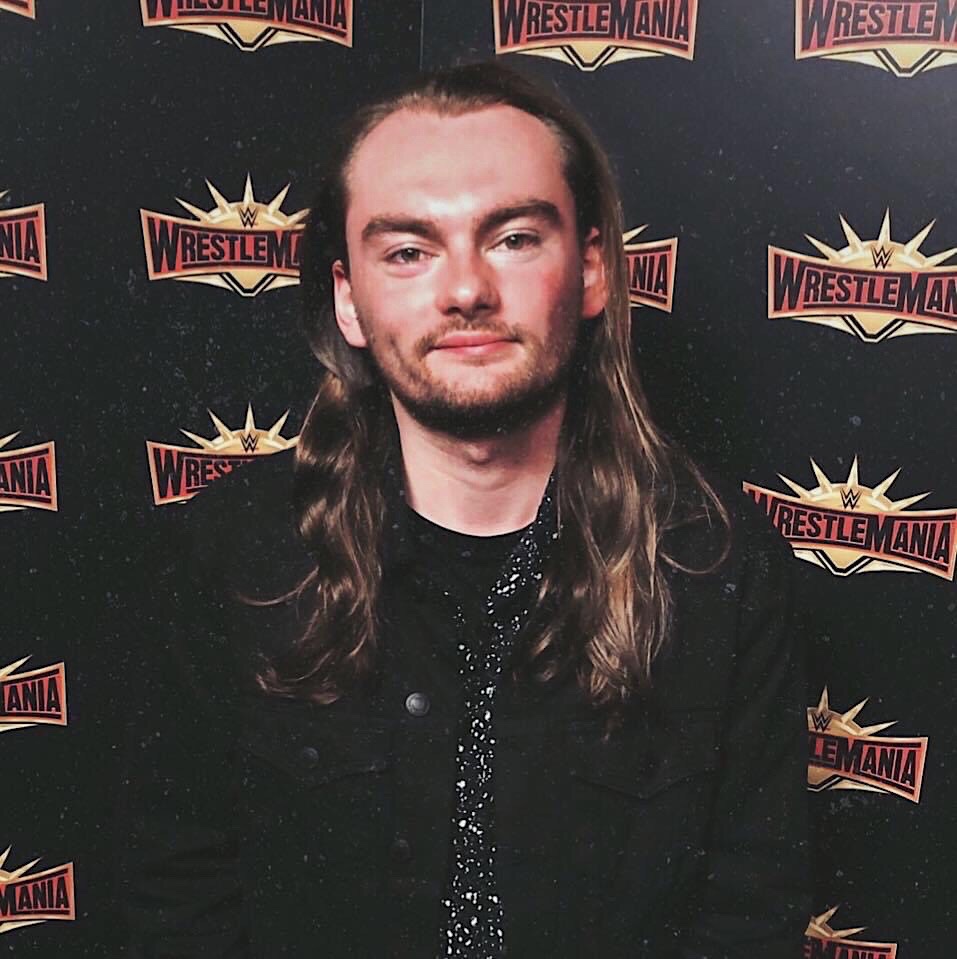
The person that I’ve spoken to for this week’s blog is the epitome of that. Morgan Richards is a journalist, radio DJ and podcast host and really has followed his dreams. He’s a huge pro wrestling and music fan, and his work in the jobs he’s done has covered those interests.

I first come across his Pro Wrestling journalism pieces via his work with The Mirror. He’s incredibly passionate and detailed in his work which has taken him even to America on two separate occasions to cover the WWE’s biggest show of the year, ā€˜WrestleMania’.

He also worked at Radio Cardiff, where he interviewed so many great Welsh bands like Kids In Glass Houses, The Blackout and many more. From there he’s gone onto to more strengths with ā€˜Sappenin Podcast which he co hosts with previous blog interviewee Sean Smith.

Last year he finished his studies at the University of South Wales and is now a fully qualified Journalist with BA honours.

In this chat, he talks up about his struggles with his studies as well as juggling them with his work in radio, podcasting and journalism. What keeps him driven and also he opens up on his journey with dyslexia and the stigmas which surrounds it.

We had an incredible in depth conversation via Zoom and I can’t thank Morgan enough for taking the time out of his busy schedule to talk to me.

Last year you completed your studies and are now a fully qualified journalist. Along with doing the podcast, what sort of challenges/pressures did you overcome whilst trying to achieve that?

It’s a really strange one with university as prior to that I’d have been doing a lot of journalism. I’d been working for Radio Cardiff where I’d be interviewing bands and doing some collective journalism as well.

I left school after my first year of Sixth Form. After I finished my A Levels I just knew that was the path I wanted to go into and didn’t see the point of wasting a year in school when I could hit the ground running by getting in some experience on the journalism front.

Going back to Uni was a bit strange because I had a few years inbetween where I never thought I’d actually go there to be honest. The experience of going there actually taught me different things and techniques. Especially styles of writing and the way I looked at things. It helped me how to approach general news, not just my topics of interest.

It was a bit of a struggle because at one stage, I was still working in radio, doing my studies and I’d started working on and planning the podcast with Sean. With those three things on the go for a while was a challenge. As the launch of the podcast got closer, I realised that I needed to take a step back with the radio, and my uni work as well as the podcast were my main priorities.

It’s hard to explain as a lot of organisation goes into it and in a way it benefitted me. Even though it was a stressful period for me, if the stress was due to something related to the podcast and if I was overthinking every detail I knew I had to stop.

I could switch my focus to a 5000 word essay which was due in the next days and vice versa. If I was overly worried about uni and needed a break from that, I would focus on certain aspects of the pod and plan that. It was a mixture of both factors in a stressful environment but it’s a time I wouldn’t change. Mainly because it was nice to have a balance and separation between the two.

When the Podcast launched in November 2018, I was halfway through my second year of uni. I’d already got used to being back in education as well as learning, writing new stuff and getting my work in for deadlines.

The podcast was a sense of joy as it was something I was very passionate and excited about. It was also hard work behind the scenes so if I was stressed about one, I knew I had the other.

I guess I’m quite an organised person anyways. If knew I had a deadline on a particular day, I knew everything else sorted around that. It has its benefits and disadvantages but it gave me room to breathe and wasn’t overthinking either one of them either.

It gave me the opportunity and space to tackle them head on and it’s all down to organisation. After the end of my first year I did freelance work for the Mirror based on Professional Wrestling and it led me to a a few mad experiences. I went to two WrestleMania weekends in New Orleans and New York.

I’d never been to America before but since I was a kid, it was my dream to go there to watch WrestleMania and I did it in my dream job. I was a journalist covering the event and some of my proudest moments of my career.

That was something that was down to the hard work I put in over the years. It most definitely shows that if you put in the effort, you can achieve anything you want.

You’ve been incredibly honest about the stigmas surrounding dyslexia and how it’s effected your studies, career and everyday life. What inspired you to be so open about this?

Well the thing is for many years I wasn’t open about it at all. I kind of hid it if anything because for me I didn’t want people to treat me any differently. One of the biggest things I’ve experienced with dyslexia and common conditions surrounding it is that people will think you’re slow or stupid and can’t do X, Y and Z and it couldn’t be any further from that.

For years I didn’t really really challenge that stigma, especially when it come to my work and never really said about it on air or anything I written at all. When I went to uni I had the same attitude of having a bit of a laugh with it. Like if I spell something wrong, I would never want to use dyslexia as an excuse and don’t want people for treat me. any different for it. For ages I kind of hid it.

Those closest to me knew and I’d have subtle jokes with them and stuff. Quite recently towards the end of 2020, I went on Sophie Eggleton’s podcast ā€˜Play, Pause, Repeat’ to really talk about it all. I was really nervous as I’d never publicised it nor ever talked about it on the podcast either.

I was quite worried about what people would think as this was a new experience to me. Opening up about dyslexia on a wide platform was completely alien to me so it was normal to feel that way I suppose. I wrote a post on my Instagram about it and Sophie did a fantastic graphic with a quote from the interview.

I realised that there’s so many people who suffer with these issues, and if talking about it helps just one person it would be a benefit. Not everyone is like me who can just take in my stride and shrug it off. Some people feel like it’s a roadblock stopping them from doing something they want to do.

So thought by going on there and anyone would think if I was able to do these things and overcome it by not letting dyslexia define him, why can’t anyone else?

I just don’t think things like dyslexia get a lot of attention and it’s hard then because you’re not going to shout at someone saying you have dyslexia. You end up putting that barrier there which makes things a bit worse and the stigma is still there. People cope in different ways like me with humour but not everyone will do it that way.

If there’s anything where you can talk about it in a structured way like me with the podcast or even just a conversation it shows you’re not the only one going through it. You won’t doubt yourself anymore as working for The Mirror was something I thought I’d never do because I thought I was bad at writing.

I believed in myself and my ability as a journalist and I achieved that goal via lots of practice to the point where their editors were happy with my work. The more you can make that stigma less awkward and embarrassing, the more people will know how to deal with it.

The lockdown period effected so many people across the world. How did it effect you personally and professionally?

It’s been a struggle and different cog in the machine to be honest with you. Its a strange one because I think on the podcast we’ve taken it as it comes whilst things were changing. As soon as it was deemed a pandemic where travel would be restricted, we were lucky that we bank our content and record plenty of stuff in advance.

Before the lockdown started, we had about four interviews already recorded so we met up before everything shut down and had a day of recording intros and outros for those few weeks. At the start it felt like 3 weeks and it would be over, which of course it wasn’t but we huddled together and thought that we had these ready to release and where do we go from there?

We tried to think of every type of alternative. I looked at different programmes online where we could interview people like Skype or Zoom as having worked on radio for years I’m such an audio nerd that I’d never want to put something out with poor quality.

So I looked into the best ways to put out quality content that sounded perfect. That really took a toll on me mentally for a while because I was anxious if we did something and people thought it sounded crap compared to our previous stuff. I found special settings for Zoom which gave the sound much better quality, I sorted a special mic for Sean to use and we took it as it came to us.

It’s a lot more work in terms of putting it together since the lockdown. Editing it and making sure the audio was decent was definitely a challenge as it wasn’t something we did in person like before. It takes a lot more time as we’re not in the same room and you’re trying to talk to the guests and some have been amazing where they have been able to use their own microphones. Others we’ve had to work a bit harder on but it was totally worth it.

It’s taken a toll on both of us mentally for personal reasons and beyond but professionally it was rough as well. Not only were we going through that change but the world was too. The music industry, PR, labels etc were all hit by it and I have notebooks full of dates of who’s touring and releasing albums. We get heads up to pencil in a certain band or person who was in the UK or releasing an album.

Some people were holding off. They waiting for the lockdown to end as we thought it was to be a few weeks and back to normal. I had conversations where someone wouldn’t do the interview in March or April but will do it in August when things are better to fly to the UK. Sadly it didn’t work out that way and everything had to be switched to online.

We had some brilliant guests since being in lockdown and when everyone realised that this is the world we’re in and it’s ā€œthe new normalā€ for a while, we able to talk to some insane guests that we thought we couldn’t get, would be too busy or hardly come to the UK. For example, Aaron Gillespie from Underoath or Matt Cutshall from ā€˜Emo’s Not Dead.

In Matt’s case he’s an online comedian so getting him on was a real coup as he doesn’t really come over the UK for anything. We’ve managed to get time with these incredible guests and had some fantastic, intimate and funny conversations with them as a result.

It’s had its ups and downs with hard work getting accustomed to the changes that needed to be made in order to make the podcast. It’s a lot more than just recording it and putting it out as there’s so many other things. We treat it as professionally as we can without taking ourselves way too seriously. It’s been a weird one but nice as we’re now getting our heads around it and we know this is the way forward for the time being.

Fingers crossed we can travel again and speak to people in person. It’s a weird process for so many people in many industries across the world and podcasting most definitely was something we had to adapt in order to continue. But we did it and we’re happy and proud to do so.

It’s definitely got us in a learning environment and something we were forced to adapt to. Even before the pandemic hit, we always promised ourselves that we’d never do interviews over the phone or video as in person is different. We just felt like it would be better that way but the conversations via video chat have been intimate as these people haven’t really been talking to anyone outside of their bubbles.

So they’ve got us two Welsh idiots arguing with each other over silly things before we start recording and then they know we’re a laugh and a connection builds ahead a great chat.

I do worry about Zoom glitches and stuff like that and some people won’t realise or even think like that. However I want to listen to this in like 20 years and think ā€œwow I spoke to Bert from The Used over Zoom? That’s crazy!ā€.

I want to be proud of the work we’ve done and not find any faults with it so that’s why I’ve done my research into perfecting the audio and overall quality. This isn’t knocking any other podcasts or anything but there’s some I listen to and the first thing I think of is that the sound’s really bad. I’m not sure if it’s just my point of view because I’m a massive audio nerd but I just want to put the best quality sounding experience out that I can.

I don’t want it to be second best and use any excuses as to why it wouldn’t be. If you put the work in, you get the results and I’m chuffed with what we’ve done to be honest.

Just the basic stuff of having something look forward to from a guest’s point of view is amazing as we can’t believe that they’re excited to talk to us. Even more when they say they’ve enjoyed it after it’s ended. I guess you can say it feels more like a chat than an interview and that means the world to us.

Whether it’s wrestling, music or radio you’ve epitomised the saying ā€œfollow your passionsā€. What would be your advise to someone who also wants to do that?

There’s quite a few things and one of them is just to go for it. You’ve got to try and if you don’t, you’ll never know what you can achieve as a result of the effort you’ll put in.

A lot of people worry about failure and that’s normal but I’d rather look back in 50 years and reflect on something that didn’t go well but accept that I tried my best.

I’m a firm believer in following your passions and one thing I’d always say is do as much as you can in order to achieve your goal. If you’re looking to get into journalism like I was, just start off with an album review if it’s music that you’re into. Write a report or story about things you like and put yourself out there.

Don’t be afraid to hit a roadblock along the way because it’s a learning curve and you can take it in your stride and move on from it. On the flip side of that and from my own experiences, as much as I recommend to put yourself out there, don’t rush into something if you’re not ready.

For example, I know a lot of people have started doing podcasts during the pandemic and have started very well. However, after a few weeks they hadn’t really continued to have the content available that they hoped to have and have fizzled out.

Do the planning and don’t jump in straight away. By planning ahead you can bank plenty of content so you don’t run out of it. It helps us massively because me and Sean know by having plenty of interviews recorded weeks and even months in advance is a massive benefit. Not just creatively but mentally as well.

We’re not rushing to put something together and it’s a relief to be honest. I’d much rather be spoilt for choice than being worried about having nothing to release. Just try and go for it. Don’t let age or anything else hold you back. We do have different things which effect us in our own particular ways but have a go. If you’re passionate about it, go for it.

I was worried about going to University but it ended up being one of, if not the best decision I’ve ever made. I’ve seen myself grow and obtain skills and connections which has made my passion for journalism grow stronger because I went for it. I backed myself and it paid off massively.

At first I went to the University for an open day as at this point I was still a bit unsure. As I said earlier, I never thought I’d ever go to uni and I went to have a look. Basically it was to see if this really was the thing for me and if it was I’d possibly apply to go the following year.

I spoke to some people there including the main lecturer there. During our conversation I mentioned the work I’d done with the radio and written pieces that I had written. He then looked at me and said ā€œcan you start on Monday?ā€. I was surprised and couldn’t tell if he meant the Monday coming or the first one of the following year.

He did actually mean as soon as possible and said I’d be a really valuable member of the course. It really did take me by surprise as I didn’t expect this at all and he referred me to some people to get everything sorted. So just like that instead of waiting a year, I pretty much immediately started the course.

Only one person knew I was going to that open day and by the day end I was a university student. If I hadn’t put myself out there by going to that open day and seeing what could happen, I’d probably wouldn’t have gone to uni for a start. Also, the connections with the people on the course wouldn’t have been made either as well as the opportunities and connections which arose in that timeline.

If I did wait a year, those things may never have happened and I don’t know if I’d have had the same passion as I do now. You can plan ahead and think that waiting is the best thing but it doesn’t go like that sometimes. If you want to do something, I’d say go for it and prepare yourself where you can.

Certain aspects of it has to be planned and some you can just go for. With the podcast we had 5 or 6 episodes recorded before we even released the trailer. We knew what we wanted to do and where we wanted to go with it. I ended up going to uni a year before I originally thought I would.

I could have easily said no and waited a year but I didn’t. I’m very glad that I did make that decision to go 4 or 5 days after the open day and thought let’s have a go and here I am today a lot better off for doing it.

You’ve spoken about how the Patreon community which supports the podcast feels more like a family than a fanbase. How beneficial have they been to you?

They’ve been massive. It’s hard to answer this as we do get a bit worried on the podcast that we talk so openly and passionately about the Patreon, how to sign up and the connections we’ve made with them that we’re don’t appear sincere.

In fact we couldn’t be more sincere about them we never expected the community that’s now there. We probably thought a handful maybe 5 people at best might sign up. Sean jokes about it all the time that they’d help us with train tickets and petrol but people took it in their stride and have been so supportive.

The support has even brought tears to my eyes. Not just because of how supportive they’ve been to me and Sean but each other. They’ve gone from total strangers to forming strong friendships and it’s on a basis of just being nice to each other.

There’s people from opposite sides of the world who’ve bonded, one who’s even flown from London to Australia to see a band. Some have gone to gigs together when they’d have gone alone in the past. When I get a notification about the group on Facebook, 9 times out of 10 it brings a smile to my face and I feel so lucky to have that lot in my life.

It’s been magical and we’ve let them make it their own. Me and Sean could have easily ā€œpoliced itā€ but where’s the fun in that? We could have just made sure they talk about the podcast but most of the time they’re talking about other things like music, or posting a funny meme. Day to day life is shared in there and it’s via a connection made by these wonderful people.

Lifetime friendships have been made and especially in lockdown they were were supporting each other with zoom chats. I feel like I’ve made some amazing friends through it as everyone has been so supportive. We don’t just say it but it is a family and I can’t thank them enough for sticking with us and being themselves.

This is all through people supporting the podcast and come in to have a laugh as well find a safe place. Me and Sean are so proud and grateful to have them via something that’s brought this wonderful bunch together. Its been magic.

What do you find helpful in overcoming difficult situations?

I think it’s more beneficial to know when to step away from something. If something is getting quite stressful, it’s good to counteract by going for a walk, making a cup of tea.

I tend to use the term ā€œmy heads goneā€ when my head is overfilled with information whilst I’m working on something. By acknowledging that, I know I need to take a step back. This could also be just by putting a YouTube video on or a comedy on Netflix in order to unwind. It feels like I can go back to work with a fresh mindset to approach it.

It’s also important from my point of view to just breathe and make the logical choices in the moment. By using logic it will guide you through a less stressful period as well. Even if it’s just for a half hour or 45 minutes, taking a break is really good as you do need time to reset in order to go again.

What I’ve learned during the lockdown is routine is key but also to mix it up. I spend loads of hours every week working on stuff but now I know I can switch off at a certain time which is beneficial to me mentally as well as physically.

It’s helpful in stressful situations as if you can use your time effectively, things will get done and you have plenty of time to rest and recharge.

You’ve made no secret that you’re straight edge (don’t drink, smoke, do drugs). How helpful is that lifestyle in regards to having a positive mindset?

Here’s the thing and it’s a very honest answer, I don’t really know. I never tried it and can’t compare to how other people cope with drinking alcohol etc.

The reason I don’t ever do any of these things is because I’ve never felt to need to. I’ve gone to parties or on a night out after a gig and never really felt I need to boost the good feelings I have from these experiences. If people are having a laugh, that’s all I need.

People ask me how do I cope on a night out without a drink and I just do. I’ve never even thought about what it would be like if I did have a drink and I’m not judgemental towards anyone who does, I just never tried it and have gotten used to it.

There’s comedy shows like ā€˜The Simpsons’ and the main character is a drunken slob, especially after a day at work. There’s a difference because there’s a preconceived notion that a person will come home from work and crack open a beer or pour a glass of wine after a stressful day. The only difference is that I do unwind but not in that way.

I’ll come home and have a cup of tea, a glass of Pepsi or my fancy drink which is a J20. If I have a whole bottle of pop, I’ll have a sugar rush whilst if you drink a whole bottle of wine, you might end up on the floor. We all deal with things in different ways.

I know people who can’t go out without having a drink whilst I can stay on the same can of Pepsi for an hour. It’s hard to describe but literally it’s just something I never fancied doing and knowing that it’s beneficial and I can still have a good time means I never have to change it.

It’s each to their own and I don’t treat or look at anyone differently. It shows you can enjoy your surroundings and I’ve had so many people ask me why I don’t drink and it’s funny to see their reactions sometimes.

They’re surprised and want to learn more as it is unusual for them I suppose to have someone who doesn’t drink out of choice and is outgoing.

You also get people who’re kind of offended and ask questions like if I’m scared or if it was family related and it’s all down to choice at the end of the day. I’ve always had a good time without them so why change the habit of a lifetime?

What would you say to someone who is struggling and doesn’t know if talking about it is the right thing to do?

I would say that if you’re really struggling and you don’t know where to to turn to. Whether that’s finding your safe space by talking to a friend, a family member or a complete stranger that wants to help, do be open as a problem shared is a problem halved.

The issues you’re facing can be shared without someone who’s possible gone through a similar path and can look at the perspective differently and give you a fresh context to it which is helpful at times.

I’ve learned myself that I can be one to bottle up things and during the lockdown I didn’t post much on social media until I posted something where I opened up. I mentioned that I’d been struggling during the pandemic and so many people reached out which was quite overwhelming to me.

Some people who I thought didn’t care that much in the past reached out which again shows by being more open, you can have help offered to you by the most unexpected of people. I felt a bit bad because I took a while to reply to them all but some people may not like to go that way.

If there’s someone who you know that you can open up to, please do so as we need to talk about the bad times as much as the good times. Having a bad day happens to us all but talking it and confronting it is the best way to move on and move forward.

The more we talk and support each other, the better place it would be for all of us.

As I said at the beginning of this post, this chat with Morgan absolutely flew by. Not because it was enjoyable talking to him, but hearing the joy that his work brings as well as his story was enthralling. I’m sure it would inspire so many people, especially those who want to follow their ambitions like he has.

The things he said about dyslexia is brilliant as well. It isn’t a topic which is talked about as much as it really should be. I totally understand why he didn’t feel like he had to be open about it as he didn’t want sympathy.

I myself have dyspraxia which effects my numeracy skills as well as my balance and coordination. That effected me massively in school to the point where in primary school, I had learning support with maths. I hated it and would feel kind of ashamed of myself. Same goes with PE as I’d struggle in certain aspects and I’d get frustrated with myself.

Like Morgan, I’ve learned that it doesn’t define me and I can still achieve so much in life. His story is proof of that as he’s a superb journalist, podcaster and more-so as a human being.

The podcast is a joy to listen to every week and the community via Patreon are a fantastic bunch. In the few months I’ve been involved, I’ve met some friends that feels like I’ve known for years and they’re very supportive to each other as well as Sean and Morgan.

After I finished recording, we chatted for ages about football and wrestling. We’re both Manchester United fans as well as wrestling so I could have spent another hour talking to him about those. It’s great to see he’s combined his love of music and wrestling into a creative outlet as well as a living. Proves to show that if you ā€œcontrol your narrativeā€, anything is possible.

As always, massive thanks to anyone who’s taken the time to have a read of the blog. Of course huge thanks goes to Morgan as well for taking the time out of his busy schedule to talk to me.

I’ve posted some information about Sappenin’ Podcast and the Patreon community as well as Morgan’s social media links.

Hope you’re all ok. Take care, stay safe and until next time don’t think of this as a goodbye, but more of a see you later!

Sappenin Podcast – available via Spotify, Apple Podcasts, A Cast and other streaming/download platforms.

Podcast social media – @SappeninPod via Twitter and Instagram

Patreon – www.patreon.com/Sappenin

Morgan’s social media – @mhrichards_ via Twitter and Instagram
Chapter 29 – Sarah Brown

Music seems to be a recurring theme in a lot of the blog posts. I’ve made no secret that it’s often my go to place to relax or even unleash some frustration. This could be by listening to one of the many genres I have on my Spotify account or via my record player.

The same goes for going to a live concert. For me there’s nothing like just going to a venue and singing along to your favourite tunes in a music venue. It’s pretty much the only place where I don’t feel self conscious about singing either!

Sadly, for nearly a year now the COVID-19 pandemic has hit the music industry massively. Artists haven’t been able to tour and apart from live streaming gigs, they haven’t been able to showcase their talents in a live setting.

The person who I’ve spoken to for this week’s blog is one of those who’ve been effected by this. Sarah Brown is a singer songwriter from Cardiff who I came across when I saw her perform a few years ago.

In this chat, Sarah opens up on how the lockdown and lack of gigs have effected her professionally and mentally. Plus she tells me how much music means to her and how what helps her through a difficult time.

How important is music to you, especially in difficult situations?

It’s everything to me. Of course it’s what I do for a living and something I’ve always wanted to do in life.

For me, songwriting is a way of therapy and if there’s something frustrating me or I need to express, putting it into a song is a great way of getting through a difficult situation.

It gives me an opportunity to really process everything going on in my mind and really express myself in a creative outlet. In general, music is the soundtrack to your life. It’s like a film and without a really good soundtrack you very rarely have a good film.

I still remember summers as a child based on what was number one in the charts back then. It really shows that music can give you an opportunity to link a song, album or artist to a certain memory or period of your life.

They say you can smell something which can invoke memories and things you see remind you of certain things. Music in a way is like a sixth sense as there’s weddings I went to as a child which I remember dancing to songs back then.

It gives me a sense of calmness but also nostalgia and for me there’s nothing else quite like it.

On your social media bios, it says that you use songwriting as a defence mechanism. What exactly do you mean by that?

It all stems from my love of the classic TV sitcom ā€˜Friends’. One of the characters, Chandler says that he uses humour and sarcasm as a defence mechanism. So it’s a play on that really but it most definitely has a deeper meaning as well.

For me, if I find something difficult or need to express myself, I’ll put it in a song. It’s most definitely therapeutic for me and by writing it down feels like a defence strategy.

Especially if I haven’t spoken up about something or something is bottled up, it’s a way of where I can take that burden off my shoulders. Seeing Chandler’s example is a way of showing we all have a defence mechanism.

If I write a song I instantly feel better about it. You see Taylor Swift as an example as her music is so personal and especially lately as she’s been in a battle with the rights over her material and her ways of fighting this negativity is making more music and that’s so much to take from.

I just know I can pick myself up from a bad place by song writing. Music is my safe haven and like I said it’s everything to me. By expressing my feelings through it is a huge example of that.

The pandemic has massively effected the music industry on all levels. How has it effected you?

It’s effected me financially because at the end of the day it’s my job, my livelihood, what I love and what gets me out of bed in the morning. From March, over a week long period I just watched all my work just disappear from cancellation after cancellation.

I think the first two months of lockdown I just didn’t want to sing. I didn’t even sing in the shower, write any songs or play any instruments. It hit me so hard that I just didn’t want to do anything and wanted to step away from all. It actually felt painful and traumatising in a way.

I know there’s so much bigger things going on in the world but this is something I’ve built for over the last 4 years and all of a sudden it’s taken away.

That was really hard to deal with at the beginning of the lockdown period. I just felt that the best option was to just step away from it all for a period.

The weather was beautiful so I sunbathed every day and was lovely to feel relaxed. After I while I started getting the itch to start writing and playing music again. Eventually I climbed back on the horse and started being creative again.

I think it’s fair to say that the experience in some ways was positive for me. It put in a position where I had to think to myself on what I was going to do. I needed a period of rest which recharged the batteries but what do I do with this time I have?

My love for music was rediscovered and is stronger than ever before. I practiced my instruments more and am so much better at them now and just knew the experience would give me time to focus and improve on what I was already doing.

It also helped me realise that my whole identity was pretty much involved with music. I was so proud of myself for doing that and I was shocked as to just how much I was working before the lockdown. I was doing 10 gigs a week at some points and I work really hard to get to where I am.

I realise now that I can fill my life with other things so it’s been a massive learning experience for me. Some people have podcasts or other projects to fall back on whilst I didn’t. It’s definitely a time to self reflect as well as grow on things you’re already doing.

What is most misunderstood about being a singer/songwriter?

There’s such a misconception, especially for females who’s trying to break into the music industry. Growing up in the 2000’s was tough.

If you wanted to get into the business as pop music was predominantly pop princesses or girl bands. If you didn’t fit into that category, the majority of the time you wouldn’t get signed or whatever.

There were some examples of artists who didn’t fit into that category like Avril Lavigne or Gwen Stefani but for a pop singer it was mainly the mainstream view that you’d have to be a pop princess. It got to the point at the age of 22 that I was told that I was too old to audition by one of my teachers at a college in London.

As a result, that was a stigma which still stays with me to this very day. It felt like I left it too late so that dream seemed shattered to me at that point. I got to the age of 32 and had an epiphany of sorts. I just flipped and realised that maybe it isn’t too late.

Who can tell me that I can’t do it and it’s too late? I could still sing so I decided to go for it and became a full time covers singer within a year and now I’m doing my own material as well.

There does come a point every now and then where I do think ā€œam I too old for this?ā€. Pretty much instantly I reassure myself by saying ā€œit doesn’t matterā€ because I’m doing something I love. Age used to be a massive factor and I don’t think it is anymore.

I think that if I had the opportunities which I have now back when I was 22/23, I wouldn’t have coped as well as I do now. I’m so much more assured and confident now and back then I hadn’t grown as a person, so I’m all the better for it and wouldn’t change it for the world.

Social media wasn’t as prominent when I was 23 and probably wouldn’t have coped with the negative side of it. I was quite naive and impressionable before. It’s an either or situation and there is no perfect scenario either. However age is for sure less of a factor.

Especially at gigs I’d get people surprised that I hadn’t settled down with kids at 32 and was still doing this. That’s all down to perceptions and it’s down to the classic society view that you should settle down and have kids. I like to break from the rule book a bit by doing what I do. It shows strength as well as ambition.

There’s a quote I love which puts things in perspective. ā€œIt’s never too late to be what you could have beenā€, and that speaks in volumes to me. I full believe that and one of my friends is seriously considering a career change and I referred that quote to her as you don’t know unless you try it. Don’t live in regret, if you have a goal, go for it.

Don’t settle in something you’re not happy with. There’s so many more opportunities out there, especially for music. Like before, the only main exposure you’d have was being signed to a record deal.

Now you have streaming, social media, You Tube. It’s definitely a better climate for musicians to get their stuff out than ever before.

It’s a competitive market but it does present so many opportunities. More people can access it and it gives you the opportunity to promote your gigs on a public platform and everyone can see it.

Aside from music, what do you find helpful in getting through difficult situations?

People. The right people of course and my family, friends and especially my boyfriend are massive for me. If there’s something we’ve leaned from 2020 it’s that we crave on human connection and that the interactions being taken from us was a massive hit to our every day life.

There’s been times in my life where I didn’t really have a good support network so now I really can appreciate what I have around me. I’m lucky to have these people in my life and I don’t know where I’d be without them.
I also believe that self care is massively important along with compassion.

Just being kinder even to yourself if you’re not feeling productive is a huge thing. By having a bath, or fake tanning is a huge way to take the load off of your mind. It helps me de-stress so I can start again in a positive mindset the following day.

I love watching TV shows as well. I’ve mentioned ā€˜Friends’ and it puts me in a great mood. Finding things which helps feel joyous or happy is massive. It helps you feel better in difficult situations and aids you to switch off when you need to from bad points or a stressful day.

Just like how a takeaway or ice cream is comfort food, ā€˜Friends’ is comfort TV for me and I could honestly watch it all day long.

Why do you think there is such a stigma surround mental health?

I think it’s a historical thing. Our parents and their parents generations didn’t have the means of support that we have today. It’s something I’ve learned from watching TV shows like ā€˜The Crown’. Back then you weren’t supposed to talk about your feelings and had to live with the ā€œstiff upper lipā€ kind of mentality.

I don’t know if it came from the war but after the horrific experiences that came from it, was that generation so grateful to not complain about the so called ā€œlittle thingsā€ in comparison to a world wide impact of a war. It might be down to that, I don’t know but little things are big in certain ways.

In the last 15 to 20 years, the stigma does seem to get less and less prominent. I think it’s much more acceptable to talk about your problems. I listen to a fantastic podcast by Fearne Cotton called ā€˜Happy Place’ and I love it. The guests she has are incredible as is she and it helps me feel like I’m not alone.

It also shows that no matter what way of life you’re from, we all have our struggles at the end of the day. When you hear someone else talk about something they’re going through that is also being experienced by yourself is refreshing but also gives you a boost. You’re not alone and proves we’re in this together.

It’s a part of your soul that you have to bear by being open. Like you with the blog or me with music, it’s a big thing to open up like that. There’s some songs I really struggle to share with my guitarist that I work with.

One of my values is to make sure all the men in my life are ok. I know it’s not up to me to fix everybody but I still want to people feel that somebody cares. I will check in on them every now and then because it’s widely known that men don’t open up a lot about their issues.

There’s that classic stereotype which of course you touch on with the name of your blog that boys don’t cry when in reality they do. It’s all about normalising it instead of creating this stigma. I know that guys find it harder to talk about things when it’s perfectly fine to do so.

From my experiences of talking my male friends, I find they do find it easier in opening up to a female which I’m not sure if it’s the same for you or other men but it’s most definitely something I notice with my friends.

If you open up about it once, that weight is lifted and you’ll keep on talking. You’re benefitting those who care because they’re there and offering help but most importantly you’re helping yourself. Getting through the bad times are important. By doing it via an honest way is a tough but essential way of doing so.

The more people I talk to about it, the more I realise that we all our battles. That could be anxiety, depression or any other factor. I’ve had my struggles from a young age and it took time to accept that I did, but a huge part of doing that will aid you in moving forward. It’s brave to be open, even on a public platform.

By going public like a blog will help and educate so many other people. It’s a learning and growing experience which will be beneficial to so many other people as well as yourself.

What would you say to someone who is struggling and doesn’t know if talking about it is the right thing to do?

I don’t like telling people what they should and shouldn’t do but I feel that talking is a huge part and a beginning of a massive journey of self discovery and acceptance. Helping yourself to get out of that rut can be aided by talking.

It’s helped me in my personal experiences. The thing that people struggle with is who to tell. Our generation struggles with talking to parents as it’s not something they would be used to from their generations.

Someone who’s not a family member like a friend or a colleague is massive. Even if it’s someone you don’t know like a counsellor or a helpline can be so beneficial as well.

Talking about it the best way for sure and you’ll thank yourself for doing it.

Like everyone else I’ve spoken to for the blog, this didn’t feel like an ā€œinterviewā€. After a few minutes it felt like a chat with someone I hadn’t seen in a while.

This of course was my first interaction with Sarah but by what was covered in her answers you’d swear I’d known her for a lot longer. She deserves a lot of credit for being open, especially about her struggles.

There’s a lot of people like Sarah in the music industry who’s been hit by the pandemic and although material can still be released, the touring and performing aspect is a massive past both creatively and financially to any artist.

I really do hope that a time comes soon where it’s ok to return to venues and Sarah as well as any other artist can go back to a packed pub, club, arena or stadium and perform the songs they love to play.

Sarah also touched on many other aspects such as perceptions in the music industry. You see a lot more honesty in that area in the modern climate and although she had her struggles, I’m sure Sarah feels all the better for being true to herself, ignoring the unnecessary criticism and following her dream.

Thank you as always for taking time to have a read of the blog. Massive thanks goes to Sarah for taking the time to have a chat as well. I wish her nothing but the very best and I’m sure when it’s safe to do, she’ll be wowing crowds just like she was before.

If anyone would like to follow Sarah on social media or music sites, I’ve posted some links below. Her current single ā€˜Salvation’ is out now and has been picked up by BBC Introducing which is massive.

Congratulations to Sarah and may the good times continue!

Hope you’re all safe, take care and until next time I guess this isn’t a goodbye, it’s more of a see you later!

Social Media – @sarahbrownworld (Instagram, Twitter, Facebook)

Website – sarahbrownworld.com

Streaming/Download – Search Sarah Brown on all music streaming platforms (Spotify, Apple Music)

Chapter 28 – Dani Hewitt

It’s a new year and here’s my first blog post of 2021. When the clock strikes 12 and a new calendar begins, we often set goals for the year ahead. Some of us are driven by those goals and make sure that we see them through.

Dani Hewitt is someone who I would say is the epitome of being driven. Anything she sets her mind to, she does it. Not only does she achieve these goals, but she puts in maximum effort and passion. 

This can be applied to many of the jobs and roles she’s had over the years. She’s an Associate Lecturer in Events Management at BIMM University, a Business A-Level lecturer at Cardiff and Vale College, studying an MSC. in EventS Project Management at Cardiff Met and runs Colour and Creation – a pop culture inspired apparel store.

She also runs W.O.M.E.N (Women of Music and Events Network), an online community which supports women, trans and non-binary people who work in the music industry. As well as all of that, she was part of the 2020 WEN Wales (Women Equality Network) mentee programme, which aims to support and help more women into public and political appointments.

I had the pleasure of working with Dani for a short period a few years ago and got to know her. Through her events management role she’s also worked with a few bands I know in the South Wales scene. Her passion for music is incredible and is always sharing her varied tastes via her social media platforms.

Dani is also a proud feminist and as per the roles I’ve previously mentioned, she uses those to promote the all-important message of equality. That’s not just with feminism, but also racial and social equality as well.

Like so many of us, Dani has also had her own struggles with mental health and like her goals in her professional life, she’s fought them head on in her personal life as well. She’s a fantastic person and couldn’t be more thankful for speaking to me for the blog.

You come across as a very ambitious and driven person. What led you to be this way?

There’s a couple of factors which contribute to my goal orientated mindset. I was never particular a strong student at school. I did ok but was never an academic by any stretch, but whilst I was growing up, I was told that I had to do well in school.

My grandmother and mother sort of drilled that into me from a young age. I think it comes from the fact my parents were only 18 when they had me. They divorced while I was young too, and my mother went back into education in her 30’s to become a nurse, and my father has always had the role of the main caregiver in the family. He’s always been someone who’s stayed home and looked after the children. Which has definitely informed my beliefs around stereotypical gender roles.

Whilst growing up, I saw myself surrounded by single, working mothers. My mother herself was one, so was my auntie and my gran. They were always telling me how important qualifications were and at some point, I must have thought it would mean life was easier with them – not sure that’s true though! But I got the sense that my priority should be on school and university.

There was expectation that I would go to university which I did, and I think as I did my studies, I felt very lonely at first as the early experiences were quite challenging. I did a foundation degree and barely passed. I then went onto a 1st year on a combined studies degree, where I didn’t make a single friend, so I felt very isolated.

I had no sense of direction and didn’t really have anyone to talk to for advice, but I then came across a course on Events Management, and I was already doing music promotion by then, as it was something I felt very passionate about. I’d been doing my own gigs since I was 18, so that course screamed out to me and opened my eyes to what could be achieved.

Music is something I feel very passionate about and the management side of things was very much a go to thing for me. A lot of my friends are musicians and what I lack in musical talent I made for with events management, so it’s a way I can still be involved with something I love.

I barely passed the second year of the degree though, a lot of my attention was on my mother, as she was very ill with post-traumatic stress at the time. I came out of uni and began to work full time as a Pension Specialist for Legal and General, whilst caring for my mother. I felt very reflective and down at the time, so it led me down my first journey towards counselling.

It felt like I hit a brick wall, I was not coping well with the job I was doing – I absolutely hated it. I realised that I was so far away from what my original goal was – to work with bands, when I was sorting through pension fund investments. I always joke that I found the opposite job to touring and that’s bloody pension plans! And I realised I had to find a way back to achieving that goal. 

I had used all the funding that was available to me at the time. When I started the Events Management course, they said I had to pay for my first-year tuition fees and then Student Finance would pay for the second and third year. But the fees were still outstanding by my second year and I had to complete the year without any online resources.

I’d also only completed my core modules, so I still had 20 credits outstanding that I needed to complete on top of my third year. I remember taking the phone call from the course leader at the time to discuss me coming back. I was outside Boots on Queen Street in Cardiff and he was telling me that because I had struggled in the second year I should complete the 20 credits and then come back for the third year, and I gave a big speech about how it was now or never and I had to come back. He was just like… ok!

I had to find the money then to go back to university and luckily I was able to work self-employed alongside it which was a massive help and I went into it with a very determined mindset. completed 140 credits in my third year and came out with a 2:1 which was absolutely unexpected. But was the product of that determination, to finish what I had started.

I went in knowing that if I didn’t do this, I’d regret it for the rest of my life. Plus, the mindset installed in me from a young age that I had to achieve these qualifications was still there. I knew I had to have a plan as my mother was still unwell but also, I knew I had to do it for myself. I don’t know where that comes from apart from having no other choice.

It’s a huge part of my personality to be goal orientated and to be organised. My current role as a teacher or my roles in events are all dependant on that. So many things change daily in music, touring and events management so you have to be on the ball. Of course you have to feel under control and that does have an effect on my anxiety but it’s all about learning to manage it whilst being honest with yourself, which of course is always going to present itself in these situations.

I suppose you could call it a sink or swim mentality as I wouldn’t necessarily say that I had a hard life, but I went through certain situations in my personal life that you wouldn’t normally go through. Having my parents’ divorce at a young age, living with my grandmother and being from a family relying on benefits was very challenging whilst growing up.

Having the expectation that I wouldn’t go down a similar path to my parents and grandparents wasn’t an easy thing to deal with, but it did set me on the road to having this goal orientated mindset I have today. It certainly helped create a perfectionist sort of mentality as well. My mother used to tell me ā€œdon’t do as I do, do as I sayā€ which resonates with me to this very day.

She says to use her as a cautionary tale, there’s also the expectancy that I’d achieve these goals and do well, but I also set my own goals to show I can do it. Aside from that, like anyone I want very normal things like a relationship or family stuff. It’s just a life lesson I was taught whilst growing up, which like so many people are handed down from their parents. Where I am now is a mixture of that mindset plus my own ambition.

How important is music to you, especially in helping you through a difficult time?

I think my whole life revolves around music. It makes me happy despite how bad some people find my music taste. I’m a grown-up Emo kid but I love pop music and so many other genres. I can’t separate my identity from music, it’s just one of those things and I think finding friends through music is massive.

I never felt like I fitted in whilst growing up, but when I discovered a group of people who like emo or rock music, and who I became friends with, I realised that it was pretty fucking amazing to be part of that community and that they were all a little weird like me. It was such a massive lift, and music came with that.

All my best friends I’ve met at gigs, and it’s the place where I feel the most like myself. It’s a shared culture and where I fit in and it’s something I rely on so much. When my anxiety became really unbearable about 2 years ago, I found music was so helpful in settling me down. If I was overthinking or was overwhelmed with feelings, it just helped calm me down and put me in a better place.

The other thing I thought about is that there’s so many ways of which you can create references and even mantras via song lyrics. If I love a song, I’ll play it constantly. The more I hear it, the more I’ll resonate with the lyrics and feel a connection to the song.

We all need emotional anchors and music has this power which can lift you out of the darkest times. The song ā€˜Airfield by Enter Shikari features some very poignant lyrics which I find so uplifting. 

ā€œWhen the winds against you

Remember this insight

That’s the optimal condition

For birds to take flight

Now the winds against you

Don’t give up the fightā€.

I think that’s prominent for something you really need to hear when you’re feeling low. It’s a massive boost and everything time I hear it, it helps me realise that I am better than this and there’s better days and experiences out there. It hits the nail on the head, especially when you’re reflecting.

Lyrics which stand out go a long way. These songs become a part of me and I do become obsessed with songs, to where they do become a coping mechanism. I feel so connected and it really does mean the world to me. I dread to think what the world would be without music, it really is the best thing and I don’t know where I’d be without it.

From your social media accounts, you’re a self-described feminist and feel very strongly about equality on all fronts. What challenges have you faced when you’ve developed these beliefs?

I’ve previously mentioned that I’ve grown up in a single parent, working mother household as my mother retrained to be a nurse.

There was absolutely no conversation that was ever said between myself, my mother, gran or my auntie who’ve all been working women, that a man should be the breadwinner and solve all of the problems that we faced as a family. If anything, they felt stronger without a male presence there, and that had a massive influence on me.

Growing up in a matriarchal family where there’s a lot of strong women, proved that they are doing what they have to do in order support their family. That the age-old stereotype of ā€œa man will save the dayā€ never, ever entered my mind.

That’s also not a stereotype that I like to share, the idea of, hyper masculinity, as I know there are so many toxic stereotypes as well of men that they [men] are trying to change, including yourself. 

The infamous ideology that a woman’s place is in the home is very out of place, especially in today’s society. My family members challenge that and I respect them for doing so. As a person, I’ve always felt resentful that a woman should feel they have do to all of the cooking, cleaning and look after the kids.

I like a tidy house but why is it just the woman’s problem? So I’ve always challenged that impression because there is actually a lot of men who enjoy it just as much as women do. Especially if it’s a team environment and you see so many examples of that these days with people bringing up their kids by sharing the chores.

My gran did have a partner whilst I was growing up, and if something needed fixing she would say ā€˜Oh wait for him to do it!’ and I’d be like ā€˜No! I’ll have a go!’. There was this self-resilience instilled in me. I was always going to go out and have a career and maybe I’ll have children but it’s not a priority for me right now.

I have this mentality due to the strong influences from a matriarchal household and has helped me become the person I am today. Don’t have children for the sake of it, there’s plenty to do before you settle down.

I didn’t know what feminism was when I was growing up. Even a few years ago, it was still seen as a ā€œdirty wordā€. I read a book by Caitlin Moran called ā€˜How To Be A Woman’ and one of the things she talks about is why feminism is seen as a dirty subject. She asks ā€œdo you have a vagina, and do you want to be in charge of it? If you answer yes to both, congratulations you’re a feminist.ā€

From that I thought ā€œwho the hell is going to tell me what I can or can’t do?ā€ I know women are represented differently in the media and that there’s an expectation on what a woman can do with their life. What I really don’t like is when women are told what they can’t do. I can do those things and there’s frustration as a result of it.

Then I started to work in an industry which is male dominated and how I was treated compared to my male counterparts was different. Things which have been said to be since working in the music industry is that I should allow the sexual advances to happen because they work with the bands that I want to work with.

When I’ve been vocal about the sexual harassment that I was experiencing, I would be told that I was making things difficult for that individual and that it wasn’t true. I’d be working a show and a male manager would make a comment about the top that I was wearing.

I’d be like, it’s a sweaty gig and it’s a top that you can see that I have boobs! Congrats! and why should I feel I have to hide my breasts? Fuck you for making me feel that I’m in the wrong!

Making a point of me for being different is one thing, but I’ve also been confronted with the stereotype that I’m only in this industry in order to sleep with bands or ā€œbe a groupieā€. 

I haven’t been taken seriously as a result in some instances, even though I have all the qualifications and experience, but the guy I’m working with is pushed up the ladder whilst I’m not. I know in some ways that can be just life, and I do need to recognise my own bias too. 

I have been told by people that they admire me for never giving up. That’s not admirable, it’s sexism at the end of the day. If I get overlooked, I don’t get that experience. 

Equally it’s fascinating to me, in regard to social constructs and power hierarchies. I’ve taught a lot this year about social theories, about where feminism came from. I’m also doing my masters where I’m looking into gender barriers, mainly focusing on women in rock music. How do these constructs even exist? It’s interesting to see how the world functions with it.

I feel like a bit of an outsider as not many people have these same goals as me. It would have been amazing at 18 to meet someone who could have talked to me about these gender issues and guide me. When I started working with the Young Promoters Network, that was the role I ended up finding myself in. I identified that I could help others. I’m proud of the volunteers I worked with and so grateful I was part of that journey. 

It’s so important for men to realise that feminism is for them as well, as we want equality for men too. My cousin was telling me that he gets told to ā€œman upā€ and I fucking hate that.

I want emotionally intelligent men around me and the classic male stereotypes are not welcome. Process your emotions and show that you’re an emotional person. There’s nothing wrong with it at all.

It might be worth mentioning that as a teenager, I just completely rejected social gender norms. I hated everything pink, and you could find me in a pair of Bernies and a baggy tshirt, wearing black lipstick. And so, it’s really been a journey to embrace my femininity.

Which now of course, I know is my greatest strength, and pink is my favourite colour!

What do you wish was more well known about mental health?

I suppose the best thing I can wish for, is that people are a bit gentler with themselves.

Rather than focusing maybe on changing the perception mental health, but that we can be easier on ourselves.

Everyone has bad days but being able to give yourself a break when you need it the most is massive. It’s probably one of the most important lessons I’ve learned, and I wish more people knew that its ok.

We’ve all got that ā€œinner criticā€ and it takes a lot to accept that we do need to take a step back sometimes, but it seems like we need permission. 

We’re told to be more active in protecting our mental health, but in those bad moments, just be gentler.

Take a step back, even if you’re taking a day in bed watching TV, do it. You need that little switch off, as it would do you the world of good.

It’s super important to have a rest, and not everyone will be vocal and as open like I am and that’s ok. We’re in a pandemic as well. Everyone has had a challenging time, some more than others. We’ve had to learn this new normal and I’ve been lucky to have been able to work from home but that’s also been stressful. Being stuck in-between the same four walls does get to you.

Be honest with yourself but also realise it’s ok to take a step back. You’ll thank yourself for doing it as well. You’ve just got to walk away, get your head straight and go again.

What else do you find helpful in getting through a tough time?

Over the past year, the pandemic has given me a chance to discover that running really helps. I think it goes hand in hand with body positivity, as I’ve learned a lot more about diet culture and I’ve spoken more openly about my body and physicality.

I found this massive sense of accomplishment with running. Until last year, I didn’t ever think that I could ever run a 5k, but I did, and it gave me an incredible sense of achievement. Working on my time gave me direction and purpose and only in the last month or two I’ve thought that my mental has turned a corner and I feel stronger. Being able to run had an impact on that.

I haven’t gone for a run in a few months now and I’m a little scared to go again but like any other thing you stop doing for a while, after a few attempts you get used to it again. When you’re ready, you’re ready. Don’t rush it.

I haven’t lost any weight by exercising as I don’t feel that’s not the goal. I do have a wedding dress to fit into, but as important body image is, I’m not obsessed with it. I’ve always been up and down with my weight. On the days I feel like I need a change, I do it because I want to.

Also, bubble baths have been my sanctuary. Usually I’d never spend Ā£5 on a bath bomb but fuck it! If it gives you a sense of relaxation do it. I very rarely drink in the house, so I just use the chance to sit and chill in the bath as a chance to unwind.

I’ve even taken my phone in the bath and done some work as well. I’m in a relaxing environment which encourages me to get stuff done, so it goes together very well and helps me feel way better in myself.

What would you say to someone who is struggling and doesn’t know if talking about it is the right thing to do?

I think it does depend on the person, and not everyone will want to talk about what’s going on or has the language to do so. The tools we have in our ā€˜mental health toolkit’ aren’t there all the time either.

If you don’t feel comfortable, that’s fine. Just those who you’re closer to, just check on them. Those people will feel they’ve developed a level of trust where they can then talk about their problems. Trust goes a long way as you’re not going to speak up if you don’t feel comfortable.

Talking helps me, but I think it might not always be the best way for others. I think then you have to just be gentle with your approach. I’m not the best at identifying other people’s emotions because I’m still learning about myself.

You don’t have to tell everyone everything but checking on your friends and family is so important. Hopefully you’ll get to a point where you find the best way of communicating and start growing from there.

I expected an honest chat with Dani, and I got way more than I could have ever imagined. I’m a sucker for a conversation, especially ones that go on for ages and with her the time flew by. 

We spoke for about half an hour after I finished recording the conversation reminiscing about the brief time we worked together, gigs, friends in common and other topics. She’s a fantastic person who’s gone through her struggles but has the strong mentality to come fighting back.

What I respect about her the most is that she knows it’s ok to take a step back and I totally resonate with that. There’s been times with this blog where I’ve posted content for weeks on end but then I’ve taken a step back and had a rest for a few weeks.

She’s fought many demons both personally and professionally. I’m a firm believer in equality especially in working environment and it’s awful to see that Dani was a victim of sexual harassment and discrimination. At the end of the day you should only be judged on your job performance, not your gender, race, image or other factors.

Her love for music and her determination are strong foundations for the person she is. Music is something very important to me and when we first met back when I helped her during her early days when we worked together, we bonded over similar music tastes. This was due to me playing some rock music via my Bluetooth speaker.

When she mentioned that she had a tough time fitting in due to her music tastes and the way she looked was reminiscent of me when I was in school. I was picked on because I listened to heavy music, wore Slipknot or Linkin Park hoodies and eventually found friends with similar tastes. Dani is proof that being yourself goes a long way.

Thank you so much for reading this post. It feels great to be back writing again after a period of time off from doing it. Like Dani says, a clear mind goes a long way and a step back definitely helps. 

Massive thanks again to Dani. I’m sure somewhere down the line I’ll bump into her at a gig and we’ll chat for ages yet again. I wish her nothing but the very best and she deserves all the success which comes her way.

At the bottom of the post, I’ve posted

a link to Dani’s apparel store named Colour and Creation. It features a lot of pop culture inspired clothes and items which are designed by the lady herself. 

Hope everyone who reads this is in a good way. Remember if you ever need support, there’s plenty of help out there both personally and professionally and my DM’s are open if anyone ever feels the need for a chat.

Stay strong, take care and until next time this isn’t a goodbye, think of it more as a see you later!

https://instagram.com/colourandcreation?igshid=p7gt37kmihmy

Chapter 27 – Christian Aldridge

Long before I started this blog, I’ve managed to have some incredible and in depth conversations with some amazing people. Many of them occurred whilst I was going through my own struggles and needed someone I could trust to confide in.

The person I’ve spoken to for this week’s blog post is one of those trusted individuals. Someone who selflessly puts others ahead of himself but also realises that self care is equally as essential.

I’ve had the honour and privilege of knowing Christian Aldridge for many years and consider him a very good friend. I’ve roomed with him on trips away and always found him trustworthy and helpful, especially in difficult situations.

Christian is also a fantastic father to two lovely children. He has an amazing job as a Firefighter, something which he worked very hard to achieve.

He sat down with me for a chat (via zoom) and we spoke about many things including his battles with mental health and what helps or inspires him to get through the tough times.

In the past, you’ve praised the use of counselling and therapy in dealing with issues with your mental health. In what ways has that helped you?

It’s helped me massively to be honest with you. When I first suffered with depression, I was put on medication and I didn’t feel that it did anything for me. There was a turning point in my life where I turned to the counselling side of things and I felt that was a huge benefit to me in comparison to being on the meds.

It only took a couple of sessions for me to open up and understand what the counselling can do for me. It also taught me skills that I can help myself on a day to day to basis. One of the biggest things I learned is that no matter what state of mind you’re in, you’re never a burden to those who care about you. You may feel that way but honestly it’s not the case at all.

I would recommend anyone who’s in a difficult place to reach out and speak to friends and family or a counsellor. Yes it cost me a bit of money but I found it massively beneficial. I’ve been back in touch with my counsellor a few times over the past 5 or 6 years when I’ve been in a bad place and he’s been incredible.

I’ve also been in touch with a counsellor from a work perspective as well. It’s not just an impact from one counsellor but I’ve benefited from the guidance of a couple of professionals from different organisations which of course is helpful to me in improving my mental wellbeing.

Initially, when I was in my darkest days I didn’t want to speak to anyone. I just wanted to knuckle down and get on with things. The belief I had was that everyone has a bad time and gets over it but it gets to a point where these negative feelings take over you and I realised I needed some help. I got to a point where I couldn’t carry on anymore and it was probably the darkest moment of my life.

I was too far gone to rely just on medication, I needed a constructive and more in depth way of assistance with my problems. After two or three sessions with the counsellor, my mentality changed massively. Instead of thinking negatively and that everything had turned to shit, I had a more positive outlook.

I set myself small challenges and was lucky in a way because at the same time as I was having counselling, I was training for a marathon. My counsellor taught me that life can be compared to a marathon and you don’t win it by sprinting. Small steps achieve big goals and I kept that in mind to manage myself in both a mental and physical capacity.

Another gain from it is to look at it from a different bubble or perspective and think about what advice or guidance I could give to other people in similar situations. Now this could be recognising it through rational or irrational behaviour.

I learned that everyone has problems but on different scales. Because I’m an over-thinker, it taught me to prepare for best and worst case scenarios, so the results don’t make me feel anxious as much because I can prepare myself for it.

The counsellor that I spoke to also helped me to understand that not only are they a third party or someone I don’t know, but also to not judge a book by it’s cover.

At first I was taken aback by the person’s appearance and I’ll be honest in saying at that time, I’d have never talked to them on the street. Honestly after a few sessions my mindset changed and I can now say that I’d happily take him down the pub for a pint.

I refer to him more as my lifesaver than a counsellor as without him I don’t know where I’d be right now. He didn’t just help me but he saved my life. I knuckled down and listened to what he said. I took so much out of the sessions and I’m a much better person for it. I’ve also referred people to him who’ve benefitted from his methods as well. Yes it costs a bit for the sessions but it’s worth it.

I could pay Ā£45 a month for gym membership or I could pay that on sessions with him. Both are beneficial but I now find talking about it is massively beneficial and I’d much prefer that over the gym any day of the week.

How challenging is your job as a Firefighter and what support is on offer?

Obviously we deal with various amounts of call outs such as house fires, car crashes. It could involve young or old people as well as assisting ambulances with people in precarious situations. Every call is different and challenging in their own aspect and I’m lucky that I have the mentality that I’m going in to the best job I can.

As challenging that it is, it is a bonus that I don’t have a massive emotional attachment to the people I’m helping because I don’t know them. That’s the way I like to keep my mindset and it does help me in these situations. Of course I have been to call outs where I’ve known the people involved who’s house has been damaged or in a car accident.

One example was some boys that I was in school with who in a really bad car accident. Whilst we were assessing the scenes one of my colleagues noticed I was as white as a sheet and realised I knew them. At the time I didn’t realise this but by reflecting, it most definitely had an effect on my mental health.

The approach I had at the time was to get on with it as I was younger, a bit naive and knew I had a job to on with which was to help with the situation.

I’m lucky that since then, I’ve moved to an area where I don’t know many people so that emotional attachment isn’t really there and I can get on with the job without any real effects similar to that example. The calls I go to are for people in that community and my goal is to help them and ensure they’re safe.

In regards to the mental health side of things, once we’re back at the station we will have a debriefing with the officers and we’ll talk about it by supporting each other. Some will sit in silence and rerun through things whilst others will use humour as a coping mechanism.

We’ve got a strong community and bond amongst ourselves where we can count on the support of each other to get through these difficult call outs. In a way I suppose it’s like counselling but more a personal approach because we work with each other every day and know that a team environment is essential with getting through the tough parts of our job.

If there’s any incidents where we need any extra support, our occupational health will always offer extra support and guidance to us. We can be referred to them for any physical or mental after effects where they’d put us in touch with nurse or counsellors. In fairness, the service is incredibly supportive of helping us if we’re struggling mentally and are very proactive in doing so.

For example, if there is an instance where someone sadly loses their life, they’d be in touch with the station asking if me or any of my colleagues need support through that difficult time. The brigade also has a chaplain who offers help if required. We’re not left alone and have many means of additional support.

We also have volunteers who offer contact details if we need a chat as well as phone numbers and other details for charities such as MIND. I can’t fault the brigade for the help they offer as they know themselves it’s a tough job which is physically and mentally challenging.

The support of my colleagues who I see every single day is fantastic. With the watch I’m on, we’re all for each other and have a family like mentality. We’re going into dangerous situations and support each other through thick and thin. We get the work that needs doing done and afterwards we can unwind and have a laugh in free time as well.

We can have our down time with the men and woman where it feels like a social club. They’re not just colleagues, they’re friends and we can be in an environment where it’s not just work problems we can talk about. I feel comfortable in venting about all sorts of problems and so do they. I’ve been through a bad time recently and they’ve been incredible even when I’ve been off work.

They’ve stayed in touch with me and Iā€˜m so grateful to them for doing that. If they ever need support they know I’m there for them as well and that emphasises just how much we value one another in a professional and personal capacity. We had social events before the pandemic where we’d go out for a beer and celebrate birthdays, anniversaries, weddings etc.

We’re not just a number, we’re a family at the end of the day. We all realise that which is essential in getting through the difficult points of our job.

You’ve been very open and honest about how difficult the lockdown periods have been for you. How much of an effect has it had?

It’s effected me massively as it’s meant that I’ve been restricted from seeing my two children. I don’t want to go too much into detail but it’s resulted in me applying for a court order to gain access in seeing them.

As hard and hurtful that is, I’ve tried to focus my mindset elsewhere and create an end goal like mentality of just getting through the year. First off I knew it was going to be difficult because my son has asthma so with the pandemic it was always going to be risky. That I can totally understand so I’d set an end date.

It kept going on and on to the point where I was struggling that badly from not seeing them, I had to take time off work. And due to the situation and COVID, not being able to regularly meet up with and visit friends and family has been tough. That’s normally a huge way of helping me as I can vent my frustrations to them and speak to them about my problems. They’re incredibly supportive and have helped me through some very tough times.

I’ve not been able to make more memories with my children over the school holidays.It’s been a horrible one to be perfectly honest with you.

With being off work, I just couldn’t feel that I could fully concentrate on my job. I’ve had to apply for court orders and with that lingering over me and not knowing what’s coming as well as dealings with the solicitors and other things had a huge effect on me.
It’s likely to remain until the new year but Iā€˜m confident it will be resolved and that everything will work out for the better.

There’s nothing more I can do at the moment as I’ve taken it down the relevant avenues and it’s got to a point where I’ve gone back on medication for anxiety. The uncertainty of things has definitely had an impact on me for sure as not knowing what’s going to happen next is worrying me.

Going back to the Fire Service, they been incredible in directing me to counselling. I’ve had six sessions with my counsellor who’s been fantastic in guiding me through these difficult days and the ever changing circumstances. Anxiety is a new aspect of mental health that is challenging me. I don’t feel down and depressed as I know my own worth as a person and a father.

It’s about getting through the anxiety and people can say what they want but I know my own worth. Going through a divorce was tough but I’ve had rediscover my self and like my counsellor said, I’ve done it through small steps.

Not seeing the kids is a tough process but I know I have support where I can speak to family, friends or professionals so I feel like I’m in a good place in regards to speaking to someone.

Is there anything else that you would like to share from your experiences?

I just find that a problem shared is a problem halved and although I might not go into full details of the problem, I’m still sharing which is essential.

I’ve been taught the comparison of a coke bottle. If you shake it, the gasses will build up to the point where it will explode if it opens. I was taught that it’s similar to your mind as all the thought processes can build up and if you don’t ever open up and share these problems, it’ll get to the point where you may brake down and vent in an unhealthy way.

It’s about being mindful and paying attention. If you’re suffering, reach out as even if you read this and need someone to talk to, give me a shout. I’m more than willing to speak and share with someone.

I’m not a trained counsellor but over the years I’ve had people come to me and ask for guidance so I’ve put them in touch with a counsellor or given them information which I’ve found helpful.

I just think people need to know how to deal with it and find the support that’s on offer. I’ve been overwhelmed with the amount of people that’s come to me but I guess it shows that I am in a better place than before because I know how to get through these tough times. It can be over various topics and these people come to me for advice.

I know that without the counselling and support I’ve had in the past I’d have never been able to be in this position so I feel like I can recommend these avenues because it did so good for me. It might not work for everyone but you can’t rule it out without trying it.

The same goes for medication. I personally am not a huge fan of it as even though I’m on tablets now I feel it doesn’t work entirely for me. Again, it might be different for someone else but I’ve never got along with it and talking about things has always been the best way of coping and responding to the bad times.

Another example that I was given by my counsellor was that if I was given a multipack of crisps and if you take one pack out and opened it, it’s fine and still nearly tidy and stacked in the cupboard. However next time you go to get a packet, you’ll open the cupboard and they’ll all fall out. It’s like your mind, everything is stored neatly but if you hit a bad time and everything gets a bit hectic, everything can kind of fall out into disarray.

You don’t have time to then neatly stack everything back in and you try to cope but putting on a front or pretending everything is ok. In comparison that is like just stuffing the packets of crisps back into the cupboard without stacking them. Until you take the time that everything has to be processed neatly and calmly, you’re going to have a negative reaction. Same as if you didn’t put the packets in neatly, they’ll still fall out every single time.

I’ve also used CBT (Cognitive Behavioural Therapy) and I’ve found it really helpful. Basically it teaches us that every single situation in life has a positive or negative impact on you, there’s no in between.

Which ever one you choose to focus on is what you want your life to go by. I try to see the positive in everything but of course it doesn’t always work that way. My mindset however is that you can always find a positive response to a negative situation.

Regardless of what the situation is, that is how I look at things these days. No matter how big or small it appears to be, how you respond is the most important thing. For example, if you lose your job perhaps the positive spin is that you’re free from an employer you didn’t enjoy working for. Maybe that environment was toxic and you needed to get out of there.

You’re then free to chase a dream or something you’ve wanted to do for a long time. CBT has taught me to get out there and believe in yourself. It made me ask myself ā€œdo you want this?ā€ and helped me realise that there are challenges in life. Yeah if you get a setback you learn from them and get back on the preverbal horse and go again. It’s all about self worth and realising how much you matter.

It’s helped me go a long way from where I was. There were times where unfortunately I considered taking my own life. I’d be out walking the dogs after a disagreement and would see a branch and would wonder if it was strong enough. That’s not just me saying it but I was in that place.

I was driving down to see a friend because I’d been in an argument and just after I came over the bridge I considered driving off the bridge. Thankfully I didn’t but I pulled into a lay-by whisky balling crying and phoned my friend who was there with me very quickly. He reassured me and calmed me down to the point where I felt like it helped because somebody was there for me.

I then went and spoke to my dad about the situation and he put me in touch with a counsellor straight away. I reached breaking point even though I had a nice house, wife, kids and a good job. I didn’t feel happy in myself which was the huge factor. I reached rock bottom and thankfully I haven’t felt that way since. Like I’ve been in tough situations since like a divorce and now the situations with the kids but never since that moment have I felt that low.

To think I could have ended it 6 or 7 years ago means I couldn’t have achieved my dreams of becoming a firefighter or seen the kids grow up. I would have left my kids without a father, my parents without a son, my friends without a friend so reflecting and seeing where I am now is huge. I know I can cope better and like I said the help from my loved ones, friends and professionals was essential in leading me down that road.

For being in a bad place and reacting positively is massive. That period was the making of me and helped me become the person I am. I don’t see bad things as failures but more as lessons. I have honestly learnt so much value and self respect for myself as I’ve been told I wasn’t good enough in the past. Since then I now know my strengths and skills which has had a massive effect on me, my partner, friends and family.

I can’t thank my life saver enough for helping me on this road because I’m a much better person for it. I’m forever grateful for his guidance and with my the counselling I’m having now, they’re noticing I’m not struggling like before but more of the situation at the moment. Yes I’m feeling anxious but I’m showing ambition to get over it and have a healthier way of life.

I’m open to all forms of therapy by getting it off my chest and that’s where I am at the moment which is huge for me in the current climate that I’m in.

How important is regular exercise in achieving a healthy mindset?

I’d say that when I was at my lowest I was exercising quite a lot. I was playing football and very active during that time. I didn’t really notice how much of a benefit of it was at the time. I have since noticed that I’ll set myself a goal through training which helps me focus on a positive thing.

This could be a half or fall marathon and although I’m not the best at sticking to a training regime, I know that by getting out there and putting in the effort is a huge benefit to myself both physically and mentally. You’re going to be in positions where you don’t feel like getting out there or you feel like shit but by putting in the effort you’ll feel so much better for it.

Yes, it’s going to hurt and yes you’ll be tired but the end results are endless and you’re only benefiting yourself whilst fighting the demons. Focusing on a few months down the line will help as I’m setting myself a challenge by getting dressed and getting out there. I’ve got dressed and not left the house and felt worse. The feeling of accomplishment is incredible and improving yourself is always a beneficial aspect.

Getting it done is the main thing and it doesn’t matter how long it takes you. When I was struggling a while ago, I mentioned that I was training for the London Marathon. My counsellor taught me back then that little steps achieve big goals. You’re not going to do it over night and taking it in stages is a huge thing.

That’s the way I look at things now and getting up at 5am for a run is tough. Whether it’s dry, raining or snowing, I know by getting out there I’m helping myself and getting a bit closer to that goal I’ve set myself. I’m lucky that I have a friend who’s supported me in training for these events. He’s trained for full and ultra marathons and he’s our mutual friend Karl Williams.

Karl has been a massive influence and inspiration into wanting to do these sort of things as it’s helped him through some very difficult times. He’s amazing for the coaching he’s done for me and his achievements have spurred me on.

I’ve always wanted to run a marathon from a young age and I had applied for the London Marathon many times over the years and when I was finally accepted was a huge thing for me. I was never going to pass this opportunity by and to get around 26.2 miles of London was one of my greatest achievements in life.

The aftermath for me was quite different as I didn’t have that goal anymore. I’d sign up for half marathons but only trained for 2 weeks before it until the time came where I realised I needed a long term goal so I applied for the London Marathon and did it again last year. After going through a divorce and everything I needed to get active and have a goal in life.

I had to feel better about myself and was lucky to get a place through the YMCA Charity. I had to raise Ā£2000 which I did by doing different fundraising events and I followed a 16 week training programme until 6 weeks before as I was struggling mentally. I kept saying to myself that I’ll go tomorrow until the time came to go to London.

By the time I reached London, I’d still not run for 6 weeks. If you don’t believe me, check my Strava records. My parents were with me and in the hotel the night before so we got some food as my Dad said it was important to carb up for the marathon the next day. I said I wanted a Chinese and ate it.

Honestly without running for 6 weeks and eating a Chinese the night before I still run and completed the London Marathon.

Yes I was slower than I expected if I put in all the training. I was driven by the mindset that I could complete those 26.2 miles and when I was reaching the hard points of the run I kept thinking that I was doing this for not just the charity but for myself.

That second time was more enjoyable because I was more chilled and knew I had the self belief. I just think you have set goals to strive for and achieve.

I haven’t really told many people but I signed myself up for the Iron Man triathlon. I was supposed to do in September of this year but due to COVID-19 it’s been deferred until September 2021. I’ve never done a triathlon before but this a goal I’ve set myself to achieve.

Before training for this, I’ve never rode my Bike 112 miles and now I have to along with swimming and running. A year ago I couldn’t swim a length but now I’m enjoying it.

The training plan is awesome and I’m coming on in big strides. I’m not one to blow my own trumpet but I’m very driven when I set myself a goal. I can’t wait to get on that beach in September in Tenby and do it as I know within myself that I can complete it.

Again, it’s not arrogance it’s self belief at the end of the day. It proves to myself that I can do anything that I can set my mind to.
A positive mindset goes a long way and I haven’t rode my bike to swam that far before but since the marathon I’ve always wanted to a marathon but felt scared.

Now I know I have the drive to train, the support of others and then I saw my friend Ron Barwick complete it in 2019 and it inspired me so I decided to sign up.

From that moment on I decided to do it. 2021 is when it’s going to be and if anyone out there is struggling, trust me the exercise helps. Whether it’s running or walking even if it’s just 1km it helps. You know yourself Josh that it’s hard to get out there as I’ve gone on a few runs with you but you did it and you managed to complete a 5km race which was your goal.

It’s just massive and the goal is a big challenge. The hardest part is stopping during the run and starting again. I’m encouraging friends who’re running now and I tell them that once you’re out that front door, once you’re halfway on your loop it’s about having a positive mental approach. If you’re halfway there, you’re not only halfway done, you’re halfway home.

It’s all about putting a positive spin on it and that goes such a long way especially if you have a goal in sight. It’s just about how you think about it and I’d love to get back to playing football. It’s tough because of my shifts but I miss the team environment which is therapeutic as you can have a laugh but have a goal and desire to win.

I made the decision a few years back to avoid injuries whilst I was running but I do occasionally play for the Fire Service team. So if there is anyone looking for someone for their team, let me know.

Why do you think that there is a stigma associated with men’s mental health?

Obviously when we’ve been growing up, we’ve been told to just get on with things and ā€œman upā€ was the classic old stereotypical coping mechanism. I just think it’s ignorance and the end of the day and years ago I was guilty of seeing things that way. I would tell people to ā€œman upā€ and now I realise that wasn’t the way to be.

You don’t understand how people are suffering with that approach. Of course you don’t have to be this so called ā€œmacho manā€ and these days things are managed a bit differently.

Tyson Fury who’s the heavyweight champion of the world in Boxing has mental health issues and has been open about it. He’s arguably the toughest bloke in the world but he’s not ashamed to admit that he’s had his dark days and has opened up about them.

He’s overcome them and has fought back to win his world titles back. Everyone has dark days and it could be situational to their life at the time. It proves that no matter what way of life you lead, we all have our struggles. It’s a short term problem but mental health is more long term with the conditions included within it. It’s a combination of things which will grind you down.

Feeling like you’re a burden is one of them. I felt like ending it all because I felt like I was a problem for people. I didn’t want to speak to friends and family because they have their own problems. I’ve learned now that these problems are being dealt with the same way as you so it’s important to share as you can help each other.

It takes focus off one another as you’re both reaching a goal by speaking out before it’s too late. Once you’re gone it’s too late but sadly you’re seeing many people in the Valleys and other areas who’re sadly taking their own lives recently. There’s then people saying via social media that ā€œall they had to do was talk to meā€, it’s all well and good to say that but you have to reach out to them sometimes.

Sometimes people need people to approach them and that goes a long way. I would still say speak out because it goes a long way. It’s the best thing you’ll ever do because you will realise that you can speak out and people are there who care about you.

Just speak to someone you know or trust or even a stranger, just do it. I’m only a message away and I can point you in the right directions.

It’s just about knowing it’s ok to talk and the irony behind your blog name is proof. Boys do cry and if you don’t, all that anger and sadness builds up. Going back to the coke bottle companion, you’re being shaken by holding it in until something small and trivial will make you explode which is your breaking point.

Mine was similar as I was battling on, years before the divorce but I’ve found myself, I have an amazing partner who was incredible kids of her own. Of course I have my two little legends who I love dearly and have my dream job. I’m not where I want to be but I’m a hell of a lot better off where I was before.

What would you say to someone who is struggling and doesn’t know if talking about it is the right thing to do?

I know a lot of people don’t like to share their problems because they’re dear to them and personal. I myself had that mentality for a long time. All I can say is that if you are struggling, reach out and speak to someone. Write out a message via text or WhatsApp and hit send as however stupid you think it is, someone on the other end will realise you need their help.

Don’t type it and delete it or ring someone and change your mind by saying you’ve rang them to see how they are. Speak to anyone to be honest. My inbox is open and I can give the name and number of my counsellor. He was class and it was needed during the scariest time of my life and he was incredible in helping me on the road to the better days.

I can’t reiterate enough how it’s helped me overcome the bad days. I see them as lessons and what positive or negative points came from them. There’s certain charities with free phone numbers which will help. I know I’m not a burden and there’s still days that I feel like one but I know my friends and family are there to help.

People are there whether it’s someone you know or you don’t. Speak to somebody as that will be the making of you and will help you towards a healthy mindset. Trust me you won’t regret it.

I’m very proud of the ways that Christian has responded to the dark points of his life. He realised his self worth and that he could use that to better himself and set good examples for those around him. He’s certainly come a long way since he hit rock bottom and although he’s gone through some very difficult points, his positivity and drive to get through is incredible.

He realised that it’s ok to open up and talk. Yes he felt like a burden but when you’re in that mindset, negativity will be more influential than positivity. He got to the point where he reached breaking point but compare to where he is now, he deserves a lot of credit.

I know his determination will guide him through the challenges he’s currently facing. He’s an incredible father to two lovely kids who love him as much as he loves them. When you’re out with Christian, he speaks so much of them and if I ever have kids, if I’m half the father he is, I know I’ve done well.

His approach to running and knowing how beneficial it is was influential to me when I started. Our mutual friend Karl Williams is a huge factor in both of our training regimes for when we’ve done events and Christian has used that to guide him even further. I have no doubt he’s going to smash the Iron Man triathlon and wish him nothing but the best for it.

He’s also achieved his dream of becoming a Firefighter. He put in a lot of work and when he reached the end goal, you could see the joy on his face. It proves to show that if you put in the graft, anything is possible.

He’s a credit to himself, his partner Megan, his children, the rest of his family, his friends and colleagues. I proud to call him a mate and will definitely pop to Bridgend to see him for a pint when things are a bit better due to the pandemic.

Thank you once again to him for speaking to me. I will post the details for his counsellor at the end of this post if anyone feels the need to explore any help that’s on offer.

Massive thanks goes as always to any of you who’ve read this post. This is going to be my final post of 2020 but I’m definitely going to be back in the New Year with more blog posts from both a personal point of view and sharing stories from more incredible people.

Have a Merry Christmas where I hope you get to spend it with those who matter the most. It’s been a shit year and spending time with our loved ones is well overdue. Have a happy new year as well as hopefully 2021 will be the start of better days for all of us.

Take care, stay safe and until next time it’s not goodbye, it’s more of a see you later!

Alex Drummond Counselling

Website – www.talkmebetter.co.uk

Phone – 07730 592549

Chapter 26 – Jonny Owen

We’re always told throughout life to follow our passions. Especially ones that gives us excitement and joy. This could be in a creative environment or being part of a community.

The person I spoke to for this week’s blog chat has most definitely done that. So much that he’s made a career out of each passion he’s followed and excelled at doing so.

Jonny Owen is an actor, writer, director, radio presenter, newspaper columnist and a board member at a football club amongst many other things. Just by following him on social media or watching his interviews you can see the joy he gets out doing things he loves.

This is essential of course when it comes to mental health as being in a creative environment gives us chance to flourish. We’re not in a negative environment and doing something we enjoy.

I first come across Jonny’s work years ago as he’s starred in many projects on stage and screen. He’s also presented and written shows for ITV Wales on numerous topics over the years such as the Aberfan Disaster.

He’s gained recognition for the incredible ā€˜Svengali’ which he wrote, directed and starred in. He’s gone on to make some incredible documentaries such as Wales’ incredible story of qualifying and wowing at Euro 2016 in ā€˜Don’t Take Me Home’ and tale of how Nottingham Forest became the first British club to win back to back European Cups in ā€˜I Believe In Miracles’.

His latest work is ā€˜The Three Kings’ which tells the story of Jock Stein, Bill Shankly and Sir Matt Busby and how they helped put British Football on the map as a major force in the game with their perspective clubs.

Jonny is also a board member at Nottingham Forest FC, overseeing the media and communications output at the club. Plus he presents a show on Sundays on TalkSPORT radio and has a column in The Times.

I recently sat down with Jonny via Zoom and chatted about a number of topics, all surrounding what helps him in difficult and stressful situations. I couldn’t thank him enough for talking to me and his positivity towards life is inspiring as it is infectious.

The original lockdown period was difficult for everyone. In what ways did you find that it effected you?

It was difficult because my mother and the rest of my family live in Wales so I couldn’t go and see them as I could before. It was also tough for my partner Vicky because she couldn’t see her family who live in Nottingham either.

It definitely put things in perspective and helps you realise how important that is and phone or video calling can help to a degree but nothing beats being there with them in person.

Just socialising with people whether it’s family or friends is what gets a lot of us through life. It’s massive how much we do rely on it. That could be anything even just by going to the pub. It’s called a pub that because it’s exactly that, a public house. A place where people and go and meet. Get together. Talk. I’ve missed that dreadfully.

I suppose it kind of recalibrated my thoughts on the way society is set up and functions. It’s stood out to me that reaching out to people, especially your loved ones, is essential. That interaction is not just part of our everyday life but is as important as breathing, eating or sleeping in many ways.

Its brought it all home to me just how interconnected we are. To lose that during the lockdown was the big shock and most definitely helps you appreciate it a whole lot more.

You’re very open and honest with many aspects of your life. What led you to be this way?

I’d like think that I’ve always been this way but there are some parts of my life which I like to keep private. However there’s plenty which I’m happy to share as well.

A lot of it comes from the fact that I grew up in the South Wales Valleys. We’re quite an open people and still very community led in an old industrial working class area.

On social media, I like to tell stories of my father who sadly passed away in 2017 and other stories from my family and upbringing. If someone enjoys them and finds comfort or solace in them stories then that’s fantastic. I think they could see a lot of parallels with their upbringing, especially if they’re from a similar background.

I quite like that and always try to be positive and make the stories about the most interesting parts of my life.

The world I grew up in was having a big, extended family with lots of friends: I think a lot of people who come from a similar background would find that relatable. People often tell me this and it inspires me to tell more of these stories, which is great.

I try and use social media as a positive and have fun too. Once you start taking yourself too seriously that can be your downfall. It’s essential to have a sense of humour and to sometimes even laugh at yourself.

I think those factors helps keep you grounded and you can’t help but be that way coming from the South Wales Valleys. You have to keep your feet on the ground as people around you will certainly let you know! Ha.

How important is Football to you and the communities involved in helping to create a positive environment?

There’s been a big and brilliant campaign for Men’s Mental Health and Football has been the vehicle where they’ve tried to advertise it as much as possible. They know they can reach that audience and it also displays just how powerful football can be.

It’s an audience which features many young men who, as statistics show, are the most likely to commit suicide than any other group in society.

Going to a watch a match in the stadium or down the pub with your mates is a massive part of a person’s week. That has gone and still isn’t here since the first lockdown and you can see the impact of just how important these things are in our lives.

Football has been at the forefront of the Pandemic in regards to the big debates that have occurred. Things like should footballers be giving more of their wages back? And then people realised the fact that they pay almost half of their wages in tax anyway.

People suddenly understood just how much footballers give and Marcus Rashford in particular has been extraordinary in his efforts to help feed hungry children here in the UK.

There’s also been a huge campaign to get fans back into grounds because people can see that so many clubs could go to the wall and that would be devastating for communities. I have to say that I have really struggled without any fans being there.

It’s a shadow of the game that we all know and love. I realised just how important the social side of it is.

It’s just not there anymore and even some players have been open in saying that they’ve struggled without any fans being there. The late, great Jock Stein who’s one of the key protagonists in my latest film, ā€˜The Three Kings’ once famously said, ā€œFootball is nothing without fansā€ and he’s absolutely right.

The last few months have really brought home Stein’s quote. At Forest we have been hoping to get fans back and the pilots that clubs have done have been terrific.

Football is important and I can’t wait for the day when everyone can go and watch a game together again. Of course it has to be a safe environment with what’s going on in the world and we’re very very careful at Forest. Especially with things such as testing, wearing facial coverings etc.

It’s been interesting too how the club has contributed during the lockdowns and to try and help in any way they could. Helping raise money for PPE, to be at the forefront of aiding the local food banks and trying to help with Framework, the homeless charity. Your local Football club can really be a vehicle for positivity in your community.

It’s not just a game, it’s actually helping the supporters during these difficult times. So many clubs which do that. Of course the teams around from where we come from, Cardiff and Swansea do loads, the main clubs in Liverpool, Manchester and so many other areas do the same. They’re fantastic and all clubs which have Community Trusts which work and help the local areas and that makes me really proud to be involved and working with Forest.

We had a moment about a year and a half ago where we had a Food Bank collection at The City Ground and the fans were magnificent in donating so much food. The guy in charge of the Food Banks was really emotional when he was talking to me that it was Forest fans who were helping feed the homeless in Nottingham which is incredible when you think about. That generosity of spirit.

A Football Club and the fans who support it are helping those who need it the most which is fantastic and I couldn’t speak any highly of the community trusts in the game and the terrific work they do.

Whether it’s acting, writing or directing, what is most misunderstood about your line of work?

I think the thing which is most misunderstood is directing. I always wanted to be a director when I was growing up and when I got the chance to do it I was ecstatic but I then realised just how much pressure comes with it. Ha!

You have to deliver, make sure the film is made correctly and that it sells well. That can bring some pressure but I love it, so I don’t want it to sound like I’m complaining.

All my life I’ve heard people say ā€œI can do thatā€ or ā€œthat looks easyā€. I’ve said it plenty of times but when you get there you realise it’s really not. Everyone suddenly looks to you and you have the responsibility to make the right call.

I’ve learned that you will get it wrong as much as you get it right. I’ve then also learned its essential to hold yourself responsible for making that choice and owning up to it.

If it goes right you can most definitely take a lot of pride out of your decision making, especially the thought process which goes into it. But it is also true that you do learn more by getting things wrong. It’s tough at the time of course but ultimately you look back and think, I’m actually glad now that it happened because I’ve got better because of it.

Why do you think there is a stigma associated with Men’s Mental Health?

Obviously this is just my view on this. I can only speak from my perspective and experience. So, I think it’s because it’s not visible. If you see somebody limping, you’d feel sorry for them because the ailment is visible. For Men in particular I also think male culture has a lot to do with it. Where we come from in post industrial South Wales, it is a tough environment as a man there’s no two ways about it.

There’s an obsession about how ā€œhardā€ physically a person is. When you were in school growing up there’s this ideology where you have to show strength and be physically tough instead of showing emotion. That’s where I think a large part of the stigma originates from. Going to school in South Wales when I was growing up, if you showed weakness it normally meant trouble. You became a target.

All those factors can come together and would make something important like opening up emotionally very difficult. You’re often told to pull yourself together and ā€œman upā€ which can be even more damaging, especially if you’re struggling with your mental health. We all have our challenges in life and if you had a physical problem, the best way to get help is by first confiding one someone. Getting advice. The same goes for mental health.

If we are going to create a world where society is more receptive and will listen to people especially with mental health issues then it can only be a good thing. It’s impossible to be happy all the time, but we can try and react positively to difficult situations as we all have good and bad days. It’s part of life but the key point is how we respond to the bad ones. If you’re upset or feeling depressed, talking about it is essential.

So, it’s for me, possibly a combination of telling younger lads that it’s ok to have your struggles in many ways as we all have bad days, that that’s perfectly normal and acceptable. How we do that is the million dollar question of course but things have improved and more men are being open which is terrific.

There are more things in place which weren’t there 10 or 15 years ago. You certainly wouldn’t hear someone openly admitting to having mental health issues when I was growing up as it wasn’t ā€œthe normā€ back then and I think thatā€˜s down to the factors I’ve mentioned above.

So at least we’re getting somewhere as it’s now a lot more acceptable for men to open up as you see in a lot of the campaigns that are going on at the moment. But it is hard and a never ending battle. I mean is it in our DNA? What was I like as a young man growing up and to be around?

Like many of us, I joined in with the so called ā€œbanterā€ without realising how it could have an effect on someone. I don’t know anyone who’s perfect and don’t think anyone is. But we can all take a step back and have a think on just how much positivity we can spread by our actions.

Reflection is an important thing as it does help us grow as people. There’s things I did back then that I probably wouldn’t do now but that’s all part of growing up.

You learn by your mistakes in life and you can try and be better. It’s a very easy thing to say but if we put that in the forefront of what we do most days then you have a chance. Just try and be better. By trying to be a better person that’s a good start.

You will have hurdles and you will stumble at certain points but keep trying. I also think I’ve been lucky. I’ve never been down that dark road in the ways that some of my friends have over the years and you can’t patronise someone in that situation.

To be happy or be positive is tough for people in that black hole. It’s a rut once you’re in it. You have to listen to them. Understand what they want to do. They’ll tell you what can help them.

One of the positive things about social media is that we can talk about topics such as mental health. Of course it does have its dark side with bullying but there’s a positive side where people can talk to you, there’s campaigns and initiatives to follow. There’s so much information out there and I always think that’s a good thing. So you can get an understanding.

I always remember being back in Merthyr about 15 years ago and being out with some of my best mates. One of them knew a person who they were in school with who’d recently passed away. He broke a little bit just by telling us about it being in a pub on what felt like an ordinary Saturday afternoon. As he did one of the boys just grabbed hold of him and gave him a hug. It was perfect, beautiful even.

We all joined in whilst stood at the bar, put our arms around him which gave him support and that was key because who knows what he was thinking when opening up. How nervous or vulnerable he must have felt. But it was a brilliant thing that he did as getting that emotion out definitely helped him. Everybody was there for him which was huge. I was very proud of the way my groups of mates acted in that moment.

The right people and right friends is exactly what you need and can get you through anything. I’m a big talker and communicator so speaking out is massive and checking in on each other is key. Especially now as just checking on those we care about would mean the world to them.

When you’re in a difficult or stressful situation, what do you find helpful in getting though those tough times?

Like we’ve said, talking is a massive thing. Just communicating or sharing your problems with someone is key and as the old cliche goes, a problem shared is a problem halved and it really is.

It’s good to talk and I really also enjoy going for a run or a walk as some physical exercise is just as good for the mind as it is for the body. Breathing is something I’ve been introduced too, about 10 years ago and controlling your breathing is essential.

Just by doing that you’re calming yourself down as your body is full of chemicals which are flying around so breathing is just able to take it back. So that’s been really important to me for sure. I know some will call that mediation, which it is, but if you think of it people have been telling us for years to take ā€˜deep breaths’ when trying to calm us down. So it makes total sense.

Someone said to me recently, you have a radio show, a column in The Times, you make films etc, so life must be great and it is of course but sometimes I wake up and I’m tired and feel like having a day of just lying on the sofa and watching telly. We all have that and how we cope is our own journey.

Sometimes just a few days off or spending time with your loved ones helps. As I said earlier you cannot be happy and full of live every single day otherwise how would you know you were? Ha!

Just going to the pub for a few pints with my mates is huge for me. To decompress and revel in a positive and friendly atmosphere is so good for me personally. If you have a stressful few days due to work it’s important to have that happy place where you feel more at ease.

I always feel stressed when a new film comes out as it’s going to be judged by critics and all that. I can’t help it. If I give myself a treat by going for a pint and a curry with my friends like giving yourself some rewards then that helps me.

What would you say to someone who is struggling and doesn’t know if talking about it is the right thing to do?

I would say from experience and from speaking to people like yourself that it’s always a good thing to do. As I said earlier, a problem shared is a problem halved and I do think it’s similar to when you’re in bed and it’s 2am, you can’t sleep as you’re restless. You’re lying there and it feels like the weight of the world is on your shoulders.

Isn’t it amazing though when the morning comes and you shower and you go out of the house how different you feel in comparison as to when you were in bed lying there thinking in the middle of the night.

Perspective changes everything and talking about our problems can be the same and just release the pressure and rationalise everything. It can get you to a place where you reflect and can’t believe what you were thinking previously.

Having a chat whether it’s a friend, family member or a professional will help release that stress and the weight on your shoulders.

I remember thinking how the shadows of the branches of a tree look like in your bedroom as a kid. The wind and lashing down. Well those same branches don’t look like they’re coming for you when it’s light and your walking past the next morning in the sunshine and it’s the same with dark thoughts or a brain numbing problem. It really can change.

As you can see from his words, Jonny is a very positive person and it definitely resonated with me. The time I spent chatting to him flew by and he definitely hit home on a lot of the points we spoke about.

I’m glad he uses his upbringing and memories to help give a positive vibe as anyone who follows him on social media will tell you he’s an incredible storyteller. I can relate to some as I’ve also grown up in the South Wales Valleys and come across some similar characters to what Jonny describes in his tales.

He knows what to do when he’s stressed and realises that talking and being honest is essential. As a bloke it is tough at times to admit to ourselves that we’re struggling but like many of us, Jonny is supportive of challenging the stigma which sadly still holds a lot of men back. It’s important that we support each other and thus getting the help we need.

Like me, Jonny loves his football and some of my favourite social memories have been at football grounds and in the pub with the boys. His love for the game has taken his career to new heights with filmmaking and of course his role with Nottingham Forest.

Thank you once again to Jonny for taking the time out of his busy schedule to talk to me. He’s a fantastic person and can’t fault him for being driven and following his dreams. He’s smashed it in every aspect and it’s a joy to see.

At the end of the post, I shall post some links and information regarding Jonny’s radio show, column and his new film, ā€˜The Three Kings’. I can’t wait to see it as I love a good Sports Documentary and everything he’s made so far has been incredible.

Hope you’re all safe, take care and until next time I guess I’ll just see you later!

Radio Show – Jonny Owen & Friends, every Sunday 9-11am on TalkSPORT

Column – Jonny Owen|Extra Time, thetimes.co.uk

Film – ā€˜The Three Kings’ is now available to buy or download from all major retailers.

Instagram – @jonathanowen71