Chapter 10 – Alicia Ewington and PAPYRUS

Starting with this post, I will be going in a new direction with my blog over the next few weeks. Instead of sharing my journey, I shall be talking to other people and sharing their stories.

Each story will be different whether it’s a friend who’s gone through struggles, a person who raises money for mental health charities or someone who works for an organisation which supports those in need. 

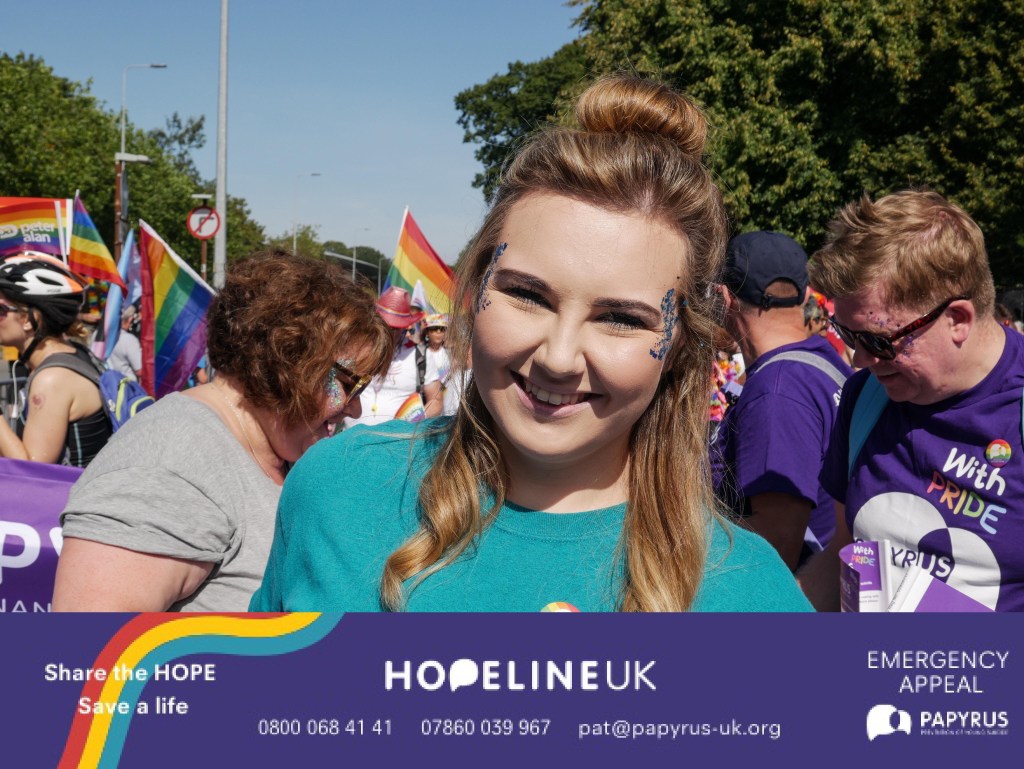
I shall begin with the lovely and fantastic Alicia Ewington. For nearly 3 years, Alicia has been working for PAPYRUS who are the national charity dedicated to the prevention of young suicide. 

We chatted for nearly an hour, covering many great things PAPYRUS offers as an organisation, Alicia’s individual role, and she also opens up on some of her own personal experiences. 

What is PAPYRUS and what is the mission that the organisation carries out? 

PAPYRUS is the national charity dedicated to the prevention of suicide in young people. What we do as a charity is that we support, equip and influence. So we influence by informing the local and national suicide prevention strategies. We also release hard hitting campaigns which are based around the key issues experienced by young people with thoughts of suicide and those who are affected by it in any way.

We equip through training and workshops to communities and professionals. Through this we educate people on suicide prevention skills and how to be more aware of potential suicidal behaviour in young people. We provide support via our helpline, HOPELINEUK.

Our mission as a charity is to work towards shattering the stigma that surrounds suicide and we believe that the majority of young suicides can be prevented. 

How does PAPYRUS carry out their mission and offer support to those in need?

We offer support via HOPELINEUK which is a suicide prevention helpline for any person up to the age of 35 who’re experiencing thoughts of suicide. We also support to those who have concerns for a young person. Concerned others include family members, loved ones, friends, carers, teachers or professionals.

If they have concerns and don’t know how to support that person or they’re concerned about a young person’s wellbeing and what they should do, they could give us a call and we’d provide confidential support and guidance. 

More so for those aged 35 and under, we offer practical help and advice. For example, we offer a safety plan. So if someone does have suicidal thoughts and they’re really struggling to manage them, we’d offer a plan that gives the person some empowerment and would keep them safe. This can be offered for both a short and long term basis. 

What is your role in PAPYRUS and what made you want to do this for a living? 

My role with the organisation is a Suicide Prevention Adviser. I work on the helpline and also go out into the community and deliver workshops and training sessions. 

Since leaving university, I’ve mostly had jobs where I’ve been in a supporting role and felt I could make a difference. I’ve worked in Children’s residential homes, young people’s supported accommodation and as a health adviser in the community. I also volunteered on an NHS trust mental health and well-being helpline.

Supporting others is important to me. When I found out about the job with PAPYRUS, I just went for it. To be honest, I wasn’t 100% sure of what the job role would entail when I went for it, I knew of course it was based around suicide prevention. But since I’ve started, I’ve never looked back and I’m always learning as time goes by. Suicide is everybody’s business and everyone can play a part in creating a suicide-safer community.

In what ways has working for the organisation helped you understand mental health in a better capacity?

Working in suicide prevention you understand that anyone can be affected by mental health and/or thoughts of suicide. Learning and becoming aware of the statistics can be an eye opener. 1 in 4 young people will experience some form of mental health issue (Young Minds) but this figure could be a lot higher.

In 2018, 1866 people aged 35 and under were reported to have died by suicide (ONS, 2018). But this could be a lot higher and there’s so much more that isn’t included in this figure.  Some deaths may not be recorded as a suicide by the coroner, the intention of death may be unknown. 

Previously, reporting a suicide was under the ā€˜burden of proof’ meaning the coroner has to be sure beyond all reasonable doubt that it the death was intended by suicide. This is now under the balance of probabilities and this change may show us an increase in suicide statistics in the future. This is a change that PAPYRUS worked hard to influence as it is important that we have an accurate representation of suicide as a community health concern.

Don’t forget these statistics don’t inform us of the many people who’re currently living with thoughts of suicide and people who’ve attempted and survived. Also those who’re bereaved by suicide. Suicide is the biggest killer of young people under 35. So my job has helped me understand all of those factors and the need for awareness and prevention.

How can people get in touch with PAPYRUS ?

Anyone who needs support and has thoughts of suicide can call, text or email HOPELINEUK (all contact details are posted at the end of the blog). The lines are open Monday to Friday 9am to 10pm. Weekends and bank holidays are 2pm to 10pm.

There’s also lots of resources and articles on our website such as leaflets which are created with young people in mind. The key themes and contributory factors that come through via our helpline help us create this literature. They are available in both English and Welsh as well as the website. 

What do you wish was more well known about mental health?

It sounds clichĆ© but I wish it was better known that it’s ok to not be ok. It’s something that’s said and seen a lot but is it really meant and taken on board? Everyone experiences ups and downs and talking about things makes it easier. 

Even people who have struggled in the past and didn’t recognise that it may have been a mental health issue, it’s ok to talk about it now. It may have happened a while ago, but trauma is subjective and if it was a traumatic experience for you, it’s perfectly fine to be open about it whether it has been days, months or years down the line. 

Anyone can experience post-traumatic stress. You don’t need to brush over it and pass it off. It does matter and talking about it will help instead of repressing it. It will help us move forward. That’s what I want people to know about mental health. It doesn’t matter how or when it happened, you can talk about it whenever you want.

Why do you think there is a stigma associated with mental health issues?

It’s a really good question because it’s one where you’d get a varied amount of answers. I think there’s a generational aspect. Times have changed over the years but also mental health wasn’t a known issue way back when. It wasn’t as openly talked about like it is today. Yet, there are so many changes for our young people today – the rise of social media means that young people are exposed to an adult world far sooner and are experiencing things that perhaps we as their elders don’t even understand. 

I feel sometimes people don’t understand or want to understand things they haven’t experienced themselves. There are lots of stereotypes. The language used when we talk about mental health can be stigmatising like calling people ā€˜mental’, ā€˜crazy’, ā€˜psycho’ or ā€˜attention-seeking’. 

We don’t always understand why someone is feeling the way they do and it can be frustrating, but that’s ok. We should just be kind and offer a helping hand or a listening ear.

Is there anything that you would like to share from a personal point of view regarding mental health? 

I experienced a really difficult relationship breakdown. For years I was in a toxic relationship with an addict that was built on manipulation, gas-lighting and emotional abuse. So when that ended it was quite a traumatic experience for me. 

I felt beaten and broken. I felt like I had lost all my independence. I felt really disconnected from myself, like I didn’t know who I was or what I liked and what brought me joy. Numb. Feeling like this left me constantly exhausted and like I didn’t have the energy to enjoy anything. 

I had to deactivate my social media because I couldn’t bring myself to see other people happy; engagements, pregnancy announcements, new homes, marriages or nice holidays. I was subjecting myself to comparison that felt so much worse because of the situation I was in. 

Over the years, I had been working so hard to try and ā€˜fix’ myself, paying for counselling sessions, asking for prescribed medication and I was never in a place where I was ready to engage with it as it was my environment that needed to change. 

It took time to acknowledge that it was a tough time. I also realised it was a traumatic experience and it wasn’t going to pass overnight. But I allowed myself to feel and process my emotions and ultimately I’m here now and a lot happier than I was. I know that now I need to take more care of myself. If I’m not sleeping well, it can be due to some flashbacks of my experiences. I now know I need to do more productive things like walking or a work-out to feel more tired. So not only am I exercising my body, but also my mind

I think there is a stigma attached to anti-depressants or medication prescribed to help with mental health concerns. It’s a sigma I feel but I know that if I felt this was something I needed, I would try it. I encourage people to explore all avenues of support and medication is one of those avenues. People can be quick to judge and say things like ā€œAre you sure you need to be on those?ā€ or ā€œWhy are you taking anti-depressants?ā€ but it’s a prescribed medication. It’s not like self-diagnosing and buying paracetamol over the counter. 

From my own counselling sessions over the years, I’ve learned that our physical health and mental health come hand in hand. Looking after your physical health will in turn benefit your mental well-being. I like a website called youfeellikeshit.com where you get asked questions like ā€œwhen was the last time you ate?ā€ and if the answer isn’t appropriate, they tell you to have something to eat. It’s all based on self-care and empowering people to look after themselves better. When things feel overwhelming it can be really easy to forget to look after yourself and sometimes having a reminder to do something as simple as having a glass of water can make all the difference.

Of course, the whole Lockdown period has been tough for all of us. How have you been doing? 

It’s been up and down or as what has been referred to as the ā€œCorona-coasterā€. Some days I have plenty of motivation where I get up early, go for a run, cook something and do some work. Then other days my alarm goes off and I can’t get myself out of bed. I ask myself ā€œwhat’s the point?ā€ because every day is the same. 

The loss of a normal routine has a huge impact. I’m starting to slowly get back to normal as my office hours have increased and I’m spending more time in the Cardiff office. I’m finding it hard to readjust to be honest after being out of this routine for so long. 

But of course this has been done to protect us and I know it’s not forever. I’ve spent the majority of it with my partner and its felt manageable as we have both been working. Things are starting to get back to normal – especially with the return of football. 

To finish up, what would you say to someone who is struggling and doesn’t know if talking about it is the right thing to do?

I would say that talking about it is always the right things to do. It’s common for people to feel they don’t have anyone to talk to, fear that they will be judged or they will be burdensome. I can guarantee that most family or friends would be glad that you have opened up rather than bottled things up and suffered in silence.

If you don’t feel like you can talk to anyone around you then there are other options for support. I think there’s a bit of a stigma around contacting helplines but it’s a safe way to feel heard and get the support you deserve. Most helplines are confidential and anonymous – it’s a space to talk through what you are feeling and some support and advice if needed.

We’re quite specific at PAPYRUS in terms of supporting people with their suicidal thoughts. But there are other options such as the Samaritans, Saneline and depending on a person’s personal experiences there are so many other avenues of support.

Under the help and resources section on our website, there is a page that provides the details for so many other support services available in the UK.

I say to people that if you don’t feel like talking, reflect on things that haven’t worked or things you haven’t tried. It’s ok to take your time and it’s ok to ask for what you need.

I’d also encourage family and friends to be aware also. If you’ve noticed any changes in someone, just ask them if they’re ok. Noticing and asking can be a huge relief for someone who is struggling to ask for help.

At the end of the day, there is hope and there is help.

As you can see from my chat with Alicia, PAPYRUS offer an incredible amount of support and education regarding suicide prevention. She also went into detail about some of her own individual battles which shows how strong of a person she is. It proves to show that no matter what avenue you choose, whether it’s counselling or medication, there is a road back and being open is key. 

I’m very glad that Alicia is in a much better place. She’s in a relationship, in a job she loves and feels she can make a difference and although like many of us, has good and bad days, she knows there’s better ways of coping and recognising these clouds are only temporary. 

As promised, there are some links and information for PAPYRUS. If you ever need to contact them, please do so. They give fantastic support and have a dedicated team 7 days a week who offers guidance through your most difficult time. 

Massive thanks again to Alicia and PAPYRUS. Of course a thank you goes to all of you so for reading this. There will be more of these interviews to come over the next few weeks covering a whole range of topics.

For now please stay safe, take care and I’ll see you later! 

WEBSITE: papyrus-uk.org

CALL: 0800 068 41 41

TEXT: 07860 039967

Chapter 9 – Social Media

The rapid rise of social media over the past 10-15 years has meant that we as a global population are more connected than we’ve ever been. It’s established an entirely new standard of human interaction via the likes of Facebook, Twitter and Instagram. This allows us to be connected to our family and friends 24/7.

However, the effects of using social media has been proven in having a major impact on our mental health. Research has shown that there is an association between social media use and mental health. For example, a British person checks their phone on an average of 28 times per day.

Also, by 2021 it is forecast that there will be 3 billion users of social media worldwide. Whilst these apps do have their benefits, using them too frequently has been shown to make us unhappy and isolated in the long run.

So called ā€œsocial media addictionā€ has been identified as a form of compulsiveness and a need of short term and instant gratification. The desire for a ā€œhitā€ of dopamine (the chemical in the brain associated with reward and pleasure) and a failure to achieve instant gratification may require a person to repeatedly refresh their social media feeds.

Now this could be anything from a message from a friend, a reply to a comment, a retweet or a simple like on a status. What has been found as a negative reaction especially with young people is that this would deem them ā€œunpopularā€ or ā€œunfunnyā€.

A study conducted by the University of Copenhagen found that many people suffer from ā€œFacebook envyā€. The study finds that that we desire a sense of worth based on how we’re doing in relation to another person.

A lack of gratification could bring on feelings of anxiety and loneliness, something of which I can relate to. When I was going through a bad point in my life, I became very reliant on social media.

As I’ve previously touched on in previous posts, I was single and had very low self esteem. One of the worst things I would do is compare myself to others via the means of social media. I’d go through many feelings of loneliness and envy just by seeing pictures and posts showing people being happy on Facebook.

It wasn’t a healthy thing to do but I’d come away with a feeling of ā€œif they’re happy why aren’t I?ā€, and constant scrolling and refreshing just kept on increasing these feelings. This would further my belief (which I’ve explained in previous blog posts) that I was the problem and cause me to isolate myself from any potential relationship.

Thankfully, when I did open up to one of my best friends, I did mention how I’d see ā€œeveryone else happyā€ on social media and how it made me feel. They instantly told me to realise that this was only increasing my insecurities and that this was another major factor in me requiring help.

I opened up on the social media aspect to the doctor when I visited them. They advised me to not use it and go ā€œcold turkeyā€. At that point I didn’t use any social media for nearly 3 months. It was a difficult concept at first but knew deep down it was a way of helping me get a clear mind and begin a process of a healthier mental wellbeing.

It also helped my concentration levels and helped me focus more on work, conversations and caused me to take up other means to pass the time such as reading. Also, of course I’m now engaged and very happy in a relationship.

I am back using social media however nowhere near the level as I was. I now understand that the break helped me realise the negativity it brought me and the that it helped me on the path to a better state of mind.

Looking back, I can also put a lot of my issues regarding social media down to the fear of missing out (FOMO). This seems to increase feelings that others are having more fun or living better lives than we are. The idea of missing out has been found to trigger self esteem issues, anxiety and prompt us to use social media on an even greater scale.

This is something that has been researched and studied by The Centre For Mental Health. The organisation found that 1 in 4 of us will feel a lack of involvement or a sense of anxiety after seeing an example of a person or persons enjoying themselves via a social media post. And focusing on this negativity would then have a detrimental effect on our personal and professional lives.

The main point that I took from this is that it is essential to talk about whatever issue you have. In my case it was loneliness and excessive use of social media will only increase the bad feelings. When it got to the point where I opened up and started getting help, a clearer mind also helped me see that overuse of social media is not a safe haven.

Another part of social media which has been found to have massive impact on our mental wellbeing is cyberbullying. Sadly this can effect any of us whether it’s young or old.

About 10% of teenagers have been reported to have been or are currently being targeted by online bullies. That goes without mentioning the many more who’re suffering in silence.

Twitter has been found to be the most reported means of cyberbullying. It’s been known to be the most common way of targeting a person who hurtful comments. Sadly this type of abuse has been reported for almost as long as the site has existed.

Blogger Ariel Waldman was one of the first users to describe just how difficult it was to deal with the abuse which came her way. Sadly in her case, a stalker published her personal contact information which prompted a string of threatening and abusive tweets.

This prompted the good nature of users to demand that the Twitter hierarchy to take swift and immediate action against users who only use the site to cause harm. Some celebrities like Olympic diver Tom Daley have been able to get Twitter to suspend accounts on a temporary and permanent basis.

Daley’s example was a person targeting him after he missed out on a Gold Medal in the 2012 London games. The user described his performance as ā€œletting his father downā€ who sadly passed away before the games. The reaction caused many to demand action and the user’s account was permanently suspended.

Sadly we see many cases where we don’t see a positive outcome. There are numerous examples of people taking their own lives due to online abuse via social media. Whether it’s a comment, being tagged in a derogatory post or being abused via direct messaging, there are many people still being harassed by online bullies.

Twitter, Facebook and other sites have made huge steps in combating cyberbullying. For example you can filter notifications, specific topics or words and reporting negative and abusive content has been made a lot easier. Whereas previously, users struggled to understand whether their reports were going noticed or not, they now receive notifications when and if the site has taken action.

There’s even means of the law becoming involved. Arrests have been made in response to people being harassed and abused online. Examples such as racism, threats of sexual and physical violence have caused for arrests and prosecutions to be made.

Using studies and new algorithms, Twitter are also working on preventing previously abusive and flagged users from creating new or multiple accounts in which they can abuse other users. Scanning email addresses and phone numbers can be a way of finding potential and consistent bullies.

The more this issue is addressed, the safer it will be for us to use social media. I myself have come away from using it feeling terrible after being tagged in a post or comment which has targeted me.

Granted, I can see how much of it can be perceived as a joke, but when it gets to a point where people you don’t even know are messaging you privately and commenting on your page, it did increase feelings of anxiety and made me feel very small. So much that it caused me to take another long break from social media and even caused me to avoid going out and break down crying to my fiancĆ©e and other family members.

Blocking people can only go so far. It also helped me realise who really were my friends and although maybe I was over reading and overthinking certain things, I know that there’s a fine line between a joke and hurting someone’s feelings.

I know that many of us, myself included have said things in the past which may have been taken in a different and negative way of which was initially intended. We all make mistakes and I’m always looking to learn from and accept my mistakes. But if you continuously do it, then you’re only going to keep causing harm to others.

Thank you very much for reading once again. Remember that there’s plenty of avenues to go down if you’re experiencing any abuse via social media. Also if you feel you’re experiencing any of the symptoms of anxiety or any other negative feelings caused by social media, please speak to someone.

I have posted some links below to some fantastic online articles which helped me. I will also encourage as always to speak to friends, family or a professional if you’re struggling.

As I say on many of my blog posts, we’re in this together. So if you can relate to any of these issues, remember that there’s a huge amount of support to help us.

Many thanks once again, stay safe and take care.

https://www.helpguide.org/articles/mental-health/social-media-and-mental-health.htm

https://youngminds.org.uk/find-help/looking-after-yourself/social-media-and-mental-health/

https://www.mentalhealth.org.uk/tags/social-media

Chapter 8 – Image

The modern climate often dictates to how we’re supposed to look. Whether it’s style, body size or cosmetics, a lot of influence and pressure is thrust upon us from a number of factors.

Negative body image refers to an unrealistic view of how someone sees their body. It is seen most commonly in women, but men can also suffer from this. You begin forming a general idea of your body in early childhood. Your body image continues to form as you age and receive feedback from peers, family members etc.

Unfortunately, the feedback isn’t always complimentary and can have a huge impact on our confidence. I’ve always struggled with my weight. I’ve never been as you say ā€œsmallā€ and I’ve had my fair share of people make give me unwanted criticism and opinion. Even now I am very self conscious. It takes a lot just for me to take my T shirt off on the beach or out in the garden to sunbathe.

As I’ve previously mentioned, I did suffer from bullying when I was in school and part of that was aimed at my weight. As I got a bit older, I did get in better shape through playing football and other forms of exercise but I’d still feel very bad about myself on almost a daily basis.

I’d self scrutinise myself when looking in front of a mirror, I’d feel like clothes were too tight on me or didn’t look right when in fact they fitted pretty much perfectly. If someone made a slight dig or joke about my weight or what I was eating it was a huge blow to my self confidence.

Even if you don’t mean it, a negative comment about a person’s weight is destroying for me and many others. If you think someone has gained weight don’t mention it to them because trust me they know.

The only person who can do anything about it is the person themselves. Plus at the time, you have no idea what effort they’re putting in to change that. Also, you have no understanding of how that comment could effect them mentally.

It’s had such an effect on me in the past that it’s derailed me off whatever diet or exercise regime that I was on. I’d binge eat, would be in tears and feel even worse about myself. I wouldn’t have the confidence and self belief to tell myself that they can’t tell me what I can and can’t do.

A few years ago my weight issues got to a real bad point. I weighed just over 20 stone and my confidence was pretty much rock bottom. I wouldn’t have photos on nights out with friends unless I was in the background or it was a crowd. More so my health was starting to suffer. It got to the point where I had a friend’s wedding and I had to wear XXL clothes.

Although I enjoyed the wedding, I felt ridiculous. I was out of breath and struggling whilst dancing. At that point I realised I had to do something. A few days later I joined Slimming World and it went on to be a very good decision as I lost over 6 stone in a 10 month period.

My confidence gradually returned and the positive comments and compliments were a massive boost. But even then people were still quick to criticise me. I’d get comments like ā€œyou’ve lost too much weightā€ or ā€œyou’ve got really cocky since losing itā€. Even at one point a so called ā€œfriendā€ who I no longer bother with would say I still need to lose a bit more and would still make jibes about my weight.

All of this would would feel like a punch to the gut. My confidence would plummet and I’d feel like I was 20 stone again. I’d binge eat again or if I was out I’d drink a lot to ā€œnumb the painā€. Essentially it was a case of putting on ā€œthe frontā€ when I was around people as I didn’t want to show that these comments and my insecurities was getting to me.

Unfortunately over the past few years I have gained a bit more weight but I have and always will have the will power to not get as heavy as I was before. More so for my health but also I didn’t want my family to worry about me like that again. The weight gain is connected slightly to my anxiety and depression as for long periods I would stay in, eat junk food and wouldn’t exercise or be active in other ways.

Gladly, as I’ve explained in previous posts, I make sure I walk or run on a daily basis. I would like to lose a bit more weight but I know that is my decision and only I can change that.

I’ve also cut out the negative influences in my life so the so called ā€œfriendsā€ who’d dent my confidence and body shame me are no longer part of my life and I’m so glad I did cut them out.

A true friend wouldn’t shame you. Maybe they’d offer a bit of constructive advice in private if they were concerned with your health and well being but they wouldn’t make fun of you in front of others. Plus they wouldn’t force their ideas of what you should look like.

The same goes for the media. You see plenty of tabloid newspapers and magazines shame celebrities who’re out and about with no make up or aren’t their idea of ā€œperfect body typeā€. It’s a disgusting ideology which is common these days.

Fortunately there are a number of high profile celebrities like the singer Lizzo, who promotes her body image and encourages us to appreciate who we are. She’s even criticised the media for continuously focusing on her body stating that it’s ā€œnot a trendā€. She’s accepted her body dysmorphia and is hoping to evolve the perceptions of it.

Body shaming is humiliating, often with painful, long term consequences. It mocks and stigmatises it’s victims, tearing down a person’s self respect and further pushing the harmful idea that our unique physical appearances should be compared to airbrushed notions of ā€œperfectionā€. If you want to make changes, do it for yourself because you want to, not because someone else is pushing you.

While body shaming, in itself, is not a crime, there are circumstances in which invading someone’s privacy to accomplish a goal of shaming them can be. At the end of the days we shouldn’t tolerate that.

Look no further than Donald Trump. He is on record for making disgusting remarks about women and their looks. It wasn’t just during his political career. Throughout much of his public life Trump has expressed criticism for women solely based on their physical appearances.

For decades the media has pushed edited and airbrushed images of how Male and female bodies should look. This includes movies, television, and print. Social media is equally as guilty. People are using body shaming as a way of disagreeing with a person’s view in a tweet or comment.

We are learning the language of body shaming via the mass media content we see on a daily basis. A teenager is seeing a tsunami of ā€œperfectā€ body images through their social media feeds. In addition, people comment on these images, sometimes in disparaging and dismissive tones.

The sooner more action is taken against these trolls and especially people in high profile positions the better. At the end of the day it’s harassment and bullying which of course will have a huge impact on a person’s mental well being.

However, It can take only one person to look at the abuse that body shamers give to realise that this is not ok. There are consequences and you see more action taken by social media sites via their standards and practices teams. Accounts can be suspended, legal action can be taken and to an extent, arrests can even be made.

The whole aim of this blog post is to help promote the whole idea is to love who you are and only you have the decision and idea to make any changes. From the examples I’ve given, if you see any comparisons I hope you realise that this these people are not helping you.

Body shaming is wrong, simple as. The more people who realise this and band together to fight this problem the better it will be for all of us. I hope that eventually this will be a thing of the past and that media platforms will take much more careful and realistic approach to their models and articles.

Thank you once again for reading this week’s blog post. The topic is something very close to home for me and I’m sure a lot of people can relate as this isn’t just a physical issue, it’s just as importantly a mental issue.

Stay positive, fight against the bullies and remember you’re a much better person than they will ever be.

Kind regards, take care and until next time, see you later.

Chapter 7 – Unity

It’s a bit of a different spin for this blog post but it’s something I feel that I have to talk about. There is a lot of unfortunate events occurring at the moment of which the whole concept of racial idea is being questioned.

As many of us have seen via the major news and social media coverage, an American person named George Floyd died recently whilst being arrested. The video that has been doing the rounds was a shocking example of the abuse of power displayed by the policeman who was in the process of arresting Mr Floyd.

The resulting outcry of reaction to these events have been clear and easy to see. Unfortunately some have taken it to more extreme levels but the majority have taken to peaceful and reasonable means of protest.

The whole aim behind the protest is to emphasise that ā€œBlack Lives Matterā€. As we all digest the news and think about how to respond and participate at such a pivotal time, it’s important to recognise and understand exactly what BLM really means.

BLM is a straightforward statement of fact. While it is not a new movement, the message is central to the protests that are occurring right now. It speaks out against the police brutality and systemic racism that caused the recent deaths of George Floyd, as well as the thousands of violent incidents that happen to black people that aren’t reported or aren’t afforded the outrage they deserve.

While the intention of the phrase “All Lives Matter” may be to convey a sense of unity, responding with ALM instead of BLM is actually more divisive than unifying. This is because it diminishes the whole focus on the violence and discrimination black individuals face pretty much every day.

For example, if someone is raising money for a cancer charity, you wouldn’t say ā€œthere’s other diseases tooā€. Of course every life is valuable as the next, but not everyone’s lives are in danger due to the colour of their skin. The whole aim of BLM is that black lives should matter as much as white lives.

Plenty of racial motivated crimes are swept under the carpet but we live in an era where it’s easy to record a video, take a picture and share it for all to see.

In this instance, the video does show George Floyd being killed by the Police Officer using excessive force. It is a very difficult thing to watch but the message is loud and clear. The point is enough is enough and it’s well time is well overdue for a change to be made.

Now this isn’t just in America. The whole ideology of racism can effect us worldwide, hence to why we’re seeing protests here in the U.K. as well as other countries around the world.

There’s a lot of people openly saying ā€œit doesn’t effect us in this countryā€ and ā€œhe’s not from this countryā€. Why should it matter if this tragic event happened at home or abroad? At the end of the day, a person has been murdered and people of all walks of life have the right to be upset. 
One of the worst things I’ve seen though is people on social media and other platforms thinking that racist language and behaviour is acceptable. 

For example, Welsh athlete Sam Gordon was recently interviewed regarding his thoughts on the events regarding George Floyd. Gordon is one of many black athletes that take part in professional sports and in this interview he opened up about how racism is a daily struggle for him.

I found the interview on Twitter and some of the replies to the article was unacceptable and disgusting. A number people were tweeting things like ā€œhe doesn’t look Welshā€ and ā€œhe only runs fast because he runs from the policeā€.

I struggle to even imagine how people could think that this is an acceptable way to speak to people. They could argue that it’s a joke and that it doesn’t mean anything but it does. Sam Gordon is an athlete who’s living his dream in competing at an elite level, he is more so a person, a human being. He’s built with the same bones, blood, skin and organs as the rest of us.

So because his skin is a different colour, some people think it’s ok to direct racist abuse his way. There’s no consideration taken to how this type of abuse would effect Gordon and anyone else in a similar situation.

Gordon has opened up about his these experiences have effected him. He’s admitted to struggling with his training, sleep and has had many instances where the abuse has brought him to tears.

He’s even opened up about his anxiety about what would happen if more abuse comes his way or towards his friends and family. This shouldn’t be a way to speak to people yet racist language is being used as freely as ever on platforms such as Twitter, Facebook etc.

There are more means of tackling this issue on social media. The teams who work for these companies are there to identify violations of the policies that are in place to protect any means of abuse. This could be racism, threats of violence and any other means of unreasonable or threatening behaviour.

It’s a shame that we’re needing more and more examples to tackle the issue of racism. You see plenty of incidents occur in football games where fans shout abuse at a player for the colour of his skin. If he’s an opposition player or even one you support yourself, it’s a disgusting and desperate way of showing your dislike. At the end of the day, there’s more important things in life than competition, but I bet that the abusers will never, ever consider the impact that the littlest comment would have.

It’s even to a degree where our politicians get away with racism. Our Prime Minister Boris Johnson infamously referred to women who wear burkas as ā€œletter boxesā€. Now this is a man who is supposed to lead the country, yet after a small storm of criticism he went on to carry on as normal without any real means of apology.

How on earth can you tackle this issue head on when the leader of the nation hasn’t even properly addressed his own actions? It doesn’t help when people in politics and other high platforms behave in this way so the public will think this is an appropriate way to have an speak to people.

In case people are wondering why I care so much, not that I have to explain but members of my family are of mixed race and I have friends who’re of many different ethnic backgrounds. If anyone spoke to them in that way, I’d be as upset and disappointed as I am now.

At the end of the day, you need to see people for their colour and stand up for them. They want to be seen and fought for. As I’ve mentioned we’re all human beings and granted we’re all not going to get along, but you have to be a pretty low person to use a person’s racial identity to get your point across.

Going back to the George Floyd story, this has caused many artists and celebrities to come out in force as well as the general public. The main point is that anyone’s life is as important as the person next to them.

The American recording artist and poet Amanda Seales once said ā€œyou cannot enjoy the rhythm and ignore the blues.ā€ This quote was highlighted by Radio 1 DJ Clara Amfo who opened up on her show about how the murder of Floyd has impacted her view on the world.

Amfo has expressed her fear that ā€œalthough the people enjoy the culture, they do not want usā€. This essentially shows that a lot of people will enjoy listen to music from black artists or watch films or TV shows with black actors/actresses but show no concern when racist abuse and actions are still occurring.

There’s a lot of education that is still required on this subject, and the point will never go away. There is a false idea that racism is just name calling but it has more of an effect than many realise. Mental health is a huge thing these days and racial abuse will impact a person’s wellbeing.

The words ā€œbe kindā€ are used a lot these days, they couldn’t be needed any more than the current climate that we’re all in right now. At the end of the day, use your common sense and hopefully you’ll realise that racism isn’t acceptable.

The world has changed a lot since the days where it was deemed acceptable by our grandparents and even some of our parents’ generations. Being racist is a choice so choose to be a better level of person. We should all stand together against this form of hatred. It will take a lot more work but hopefully one day soon everyone will understand how much pain it will cause and make it a better environment for us all.

Please make sure to check out the links that I’ve posted below which will help educate, sign petitions, give you a chance to donate and overall, really make a change.

Thank you very much for reading this. Don’t feel like you shouldn’t voice your concern for these issues. If anyone says that you shouldn’t interfere, they’re part of the problem and not the solution.

Many thanks, take care and stay safe.

#BlackLivesMatter šŸ–¤

https://blacklivesmatter.com/

https://blacklivesmatters.carrd.co/

http://www.standuptoracism.org.uk/

https://www.theredcard.org/

https://minnesotafreedomfund.org/

Chapter 6 – The Stigma

I like to think that in the present day, it’s a much better place for men to speak about their problems, especially mental health. Compared to even a few years ago, some huge steps have been taken to encourage us blokes to open up.

While we have done a much better job of reducing the stigma and expanding opportunities for support, men still may be experiencing shame, guilt and other negative feelings that could lead to them being less willing to ask for help.

75% of all suicides are male, which works out at an average of 84 men a week that take their own lives. Numerous studies show that men find it difficult to talk about their issues but why is this? It all stems from the age old belief that ā€œmen don’t cryā€ and that we should show strength. A lot of men fall prey to the ideology that we should fix our own problems. This has passed through the generations and still has a hold on many of us to this day.

It’s very hard for anyone to realise that they have a problem. I myself have even felt that admitting that I have issues with my mental health is a sign of weakness. And after doing some research, I’ve found that it’s not just asking for help that men struggle with.

Many studies have shown that males have more difficulty in establishing social connections. This is believed to have stemmed from years of influence from the ā€œstrong, quite masculineā€ men we’ve seen in films. As many would find that an appropriate role model to aspire to be, it can also be dysfunctional and misleading.

This model of masculinity can be seen as an important factor as to why men underreport symptoms of mental illness. It can also contribute to increased rates of depression, anxiety and can mislead us down some dark paths.

As I’ve previously touched on in previous posts, I used to mask my issues with ā€œThe Frontā€. I’d pretend everything was ok, I’d smile, make a joke and on nights out I’d drink heavily. Even to the point where I’d black out and have limited memory of what happened. This was my way of escaping and thankfully I’ve now realised that it was very dangerous and unhealthy way of dealing with my issues.

I’d also be guilty of comparing myself to others. I would look at a friend or family member and think ā€œwell he’s not struggling so why am I?ā€. I’d see these people being happy so I stupidly would then accept a path of repressing my feelings and forcing myself to appear in good spirits and when I would struggle in social situations I would drink more.

My example is proof that when people are struggling with depression, anxiety, and other mental health conditions aren’t embracing healthy coping resources, they may turn to alcohol and other drugs as a way to numb the pain. I can honestly say that I’ve never gone beyond alcohol but unfortunately a lot of us do use other means of coping with our problems especially drugs.

This can lead us down a very dangerous way of life and the reliance on these substances can turn to addiction and further erratic behaviour. Sadly mental health issues can very quickly manifest into physical issues, especially when people are self-treating with alcohol and other substances. This proves to show that mental health goes hand in hand with physical health, so our overall wellness can be effected.

Don’t forget that there is a lighter path which is more successful. That of course is opening up and talking about our problems. As I’ve previously mentioned whether it’s a friend, family member or a professional, there is help for us out there. There’s no shame in admitting that we are struggling and it’s the first and one of the most important steps to getting healthier.

No one is immune to stress. Talking with others about how it is affecting you can foster empathy, camaraderie, and support. All of which fight against the feelings of isolation on which mental health issues can thrive on. Awareness and education are key and I’ve found this on a personal level. The more of us that talk, the less of us will hide our problems.

I’ve even experienced it on a personal level. There’s been situations where my Father has been upset and whilst trying to talk about what was bothering him, he would reply with ā€œI shouldn’t have to sayā€ and that I should be opening up to him and not the other way around.

I was nearly heartbroken to see my Dad with this type of mindset. Thankfully, he’s made many big steps since and is now in a much better place. Every now and then, me and him sit down a have a chat about how things are. The good thing now is that if anything is bothering us, we talk about it.

If you’re worried that someone you care about may be struggling, or you think that you yourself need help, look for these signs that indicate a need for assistance:

  1. Change in mood
  2. Difference in work performance
  3. Weight change
  4. Sadness, hopelessness, or avoiding things that provide enjoyment such as social situations.

If you recognise any of these symptoms in a loved one, many health organisations recommend reminding them that asking for help can be a sign of strength rather than weakness. It shows you have the self belief and desire to get fight the problem head on with the right levels of support with you.

There is hope. Help is available. Educate yourself about yours or a loved one’s mental health issues. To treat this problem, we must get the message across that it’s ok to ask for help, whether for yourself, your loved ones, or anyone you think may need it.

And for those who have overcome mental health obstacles in their own lives, don’t be afraid to share your own stories. Sometimes reducing stigma means being willing to talk about the times we’ve needed to ask for help ourselves.That has been the whole aim for this blog. The whole point was for it to help people in similar and even worse situations. I’ve had friends and even people I’ve never met message me asking for advice regarding their issues and hopefully this will encourage them to start the path towards a better and healthier mindset.

If a blog is not be the preferred route for you, there’s other things to try. Even if it’s a long, detailed chat, sharing our stories is essential in showing that the stigma is getting smaller as the days go by.

It honestly is a huge feeling of relief after I’ve spoken to someone. It really does feel like a weight has been lifted and further directs me to a much better and healthier mindset. There is no shame in it, and although it took me a while to accept that I needed help, I can say that it pretty much saved my life because bottling it up wasn’t helping me or my loved ones.

Thank you once again for taking the time out of your day to give this a read. Remember, you’re not alone, we’re in this together and we will get through as a team. If you’re reading this and would like to talk about anything that you feel is bothering you, don’t hesitate to message me on any of my social media sites.

I’ve also posted a few contact numbers and websites which also provide fantastic support. As the old saying goes ā€œit’s ok to not be okā€ and I encourage you to seek help as it’s going to be one of the best things you’ll ever do.

Stay safe, take care and I’ll see you soon.

Samaritans – https://www.samaritans.org/?nation=wales or telephone 116 123

NHS – https://www.nhs.uk/conditions/stress-anxiety-depression/mental-health-helplines/ or telephone your local GP.

Mind – https://www.mind.org.uk/ or telephone 0300 123 3393